
Imagine waking up at 3:00 AM not to the quiet of the wilderness, but to the jarring roar of your RV furnace fan. You're met with a blast of dry air that leaves your throat parched while your propane gauge creeps toward empty. It's a frustrating reality for many off-grid travelers who feel tethered to loud, uneven heating. We agree that your journey should be defined by peace of mind and reliable comfort, not by the stress of managing outdated equipment. This article explores the primary benefits of hydronic heating in an RV and how it serves as a comprehensive energy management tool for your vehicle. You'll learn how these systems provide silent, multi-functional warmth that significantly outperforms traditional forced-air units. We will walk through the advantages of continuous hot water, improved fuel efficiency using your existing diesel or gas tank, and the consistent, moist heat that ensures your living space remains comfortable in any climate, even at high altitudes.
Key Takeaways
- Understand how circulating glycol through silent air handlers creates a more stable, comfortable environment than the dry, dusty air of a standard furnace.
- Discover how to utilize "free" engine waste heat to warm your cabin while in motion, reducing your reliance on auxiliary fuel.
- Learn about the multi-functional benefits of hydronic heating in an RV, including how one system provides both continuous hot water and engine pre-heating.
- Identify why specialized components like high-altitude kits and advanced controllers are vital for long-term reliability in the field.
What is RV Hydronic Heating and How Does It Work?
Hydronic heating represents a significant departure from the standard forced-air furnaces found in most recreational vehicles. At its core, an RV hydronic system is a closed-loop fluid system that mimics residential radiant heat by circulating warmed liquid through a network of pipes to provide consistent, gentle warmth. Unlike traditional units that simply heat air and blow it into the cabin, these systems use a liquid medium to transport thermal energy to where it's needed most. This method provides a more stable environment, which is one of the primary benefits of hydronic heating in an RV for those who travel year-round.
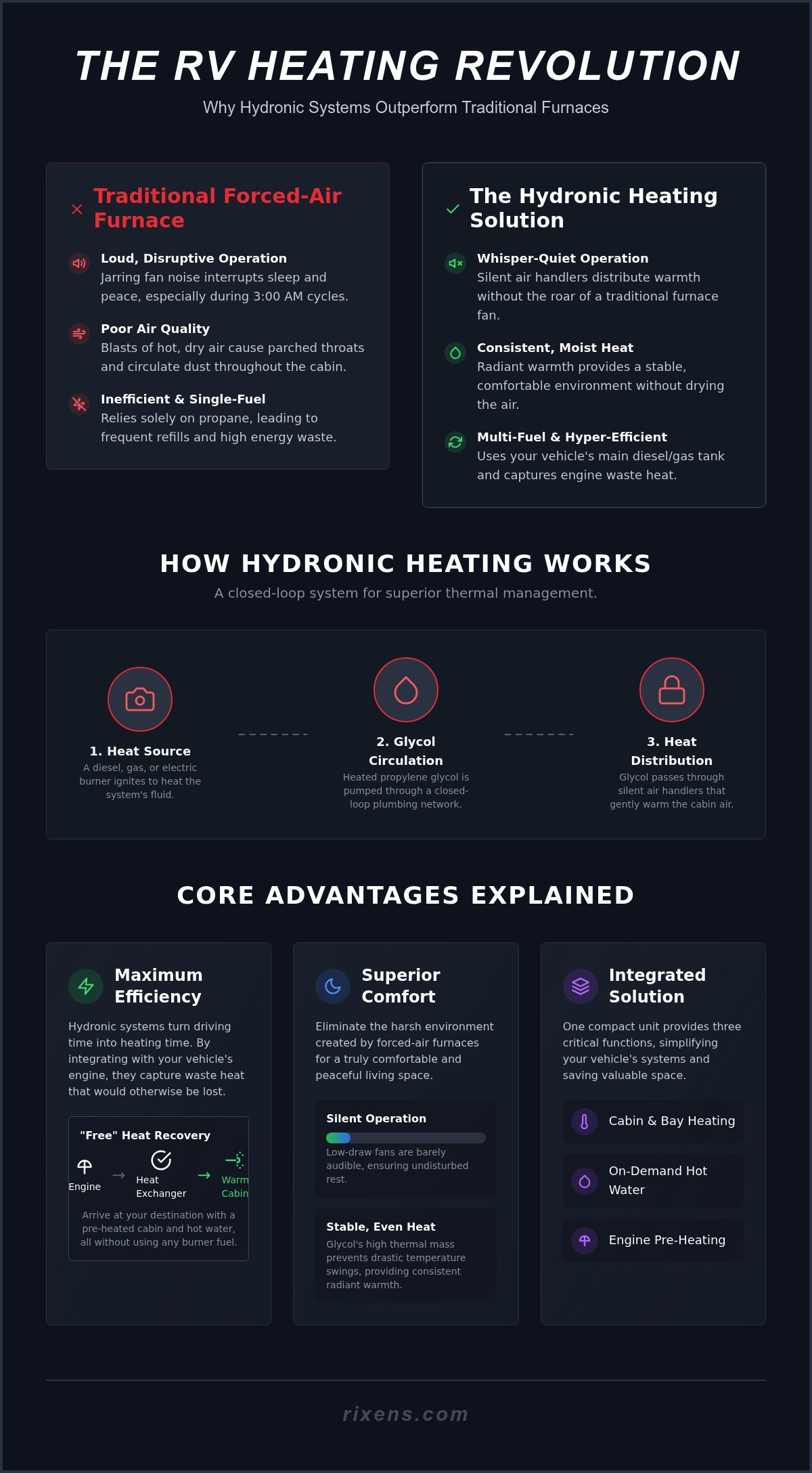
The system relies on three essential components to function: a heat source or burner, a heat exchanger, and silent air handlers. The burner ignites fuel to warm a glycol mixture, which then passes through the heat exchanger. From there, the warmed fluid travels to small, quiet air handlers located throughout the coach. These handlers use low-draw fans to pull air across the heated coils, distributing warmth without the loud roar or "dust-storm" effect of a standard furnace. This process reflects the fundamental principles of What is Hydronic Heating, focusing on efficiency and comfort rather than just moving hot air.
The Role of Glycol in Mobile Heating
We utilize a specialized propylene glycol mixture rather than plain water for several critical reasons. First, it provides essential freeze protection, ensuring your system remains intact during harsh winter camping or while in storage. Beyond safety, glycol has a much higher thermal mass than air. It retains heat for significantly longer periods, which means the burner doesn't need to cycle on and off as frequently. This leads to a more stable interior temperature and reduces the mechanical strain on your hardware over time.
Diesel, Gas, and Electric Heat Sources
One of the most practical advantages of these systems is their fuel versatility. Most modern units, such as our MCS One Hydronic System or various Hydronic Heater Kits, can tap directly into your vehicle’s primary diesel or gasoline tank. This eliminates the need to carry extra propane and ensures you have a massive fuel reserve for long-term off-grid stays. Many systems also include electric heating elements. When you're plugged into shore power, you can maintain cabin warmth using electricity, preserving your fuel for when you're truly off the grid. This redundancy provides a vital layer of safety and peace of mind during remote travels.
Maximum Efficiency: Leveraging Engine Waste Heat
Traditional heating systems are reactive; they wait for you to feel cold before burning fuel to create warmth. A properly designed hydronic system is proactive. By tapping into your vehicle’s engine coolant loop, these systems harvest the massive amount of thermal energy generated while you drive. Instead of venting that heat into the atmosphere through the radiator, we redirect it into your living space. This is one of the most compelling benefits of hydronic heating in an RV, turning your transit time into a valuable opportunity for energy management.
How Waste Heat Recovery Works
The process is elegant and mechanically simple. A heat exchanger acts as a bridge between the engine's cooling system and your RV's internal heating loop. As you travel down the highway, the engine's hot coolant transfers its thermal energy to the glycol circulating in your cabin's pipes. This means your air handlers can provide continuous, gentle warmth without ever firing the diesel or gas burner. For van lifers and long-haul travelers, this is a game-changer. You arrive at your campsite with a cabin that's already at a comfortable temperature and a domestic water tank that's piping hot, all without consuming a drop of auxiliary fuel.
Reducing Fuel Costs on the Road
Efficiency is about more than just comfort; it's about the long-term sustainability of your off-grid lifestyle. When you rely on engine heat recovery, you significantly reduce the load on your primary burner. Fewer ignition cycles mean less wear and tear on your hardware, which extends the service life of your investment. It also drastically cuts down on your fuel consumption. While a standard propane furnace requires frequent, often inconvenient refills at specialized stations, a hydronic system leverages the fuel you've already bought for your engine. This minimizes your propane dependence and ensures you can stay remote for longer periods.
If you are planning a complex build, exploring a high-performance MCS One Hydronic System can help you maximize these efficiency gains from day one. By choosing to recover waste heat, you're making a responsible choice for both your wallet and the environment. You ensure that every mile you drive contributes directly to your comfort while protecting the longevity of your heating hardware.
Superior Comfort: Silent Operation and Air Quality
Standard RV furnaces are notorious for their aggressive operation. They cycle on with a loud roar, blowing a blast of hot, dry, and often dusty air that settles just as quickly as it arrived. This creates a "yo-yo" effect where the cabin is either too hot or too cold. One of the most appreciated benefits of hydronic heating in an RV is the shift toward a more sophisticated, radiant-style warmth. Instead of one large, central blower, a hydronic system utilizes multiple small, whisper-quiet fans. These low-draw units provide a steady flow of heat that maintains a consistent temperature from the floor to the ceiling. For light sleepers, the near-silent operation of hydronic air handlers eliminates the jarring acoustic interruptions of a traditional furnace fan kicking in during the night.
The Health Benefits of Non-Drying Heat
Forced-air systems are essentially giant hair dryers for your living space. They strip moisture from the air, which can lead to dry skin, irritated sinuses, and respiratory discomfort during long winter trips. Hydronic systems are "wet" systems; they heat the air indirectly by passing it over fluid-filled coils. This process preserves natural humidity levels within the cabin. Because the fans operate at a much lower velocity, they don't whip up dust, pet dander, or allergens from the floor. This creates a cleaner, healthier breathing environment, which is a critical consideration for travelers with sensitivities or those spending extended time in confined spaces.
Consistent Heat Distribution
Uneven temperatures are a common complaint in mobile living. You might have a sweating forehead while your feet are freezing. We solve this "cold feet" problem by strategically placing small air handlers in specific zones, such as under the dinette, near the bed, or in the bathroom. This allows for precise, multi-zone climate control. In larger coaches or custom van builds, we can even integrate hydronic floor heating. By running the glycol lines beneath the flooring, the heat rises naturally and evenly. This eliminates cold spots entirely and provides a level of luxury that traditional furnaces simply cannot match. If you're looking to upgrade your setup, our selection of Air Handlers & Parts allows for a highly customized layout tailored to your specific floor plan.
Integrated Solutions: Hot Water and Engine Pre-Heating
One of the most significant benefits of hydronic heating in an RV is the consolidation of multiple, bulky appliances into a single, high-performance footprint. Most standard RVs require a dedicated forced-air furnace and a separate 6-gallon water heater tank. An integrated system like our MCS One Hydronic System replaces both, managing cabin warmth and domestic hot water through one centralized unit. This "two-for-one" value is a cornerstone of modern, efficient RV design. By eliminating the need for a separate water heater, you reclaim valuable square footage that can be better used for storage or living space.
Continuous Hot Water on Demand
Traditional RV water heaters are fundamentally limited by their tank capacity. Once you've used those six gallons, your morning routine stops while you wait for the recovery cycle. In a hydronic setup, a high-efficiency plate heat exchanger transfers thermal energy from the glycol loop directly to your fresh water line as it flows. This results in continuous hot water on demand. You can enjoy back-to-back showers or handle a full sink of dishes without ever worrying about the water turning cold. It’s a level of residential-style comfort that completely changes the off-grid experience.
Cold Weather Engine Protection
Beyond interior comfort, these systems provide a critical layer of protection for your vehicle’s mechanical longevity. In sub-zero temperatures, diesel engines often struggle to start because of cold combustion chambers and thickened oil. Since the hydronic loop is integrated with the engine's cooling system, you can use the heater's burner to warm the engine block before you ever turn the key. This pre-heating process significantly reduces friction and mechanical stress during frigid morning starts. For travelers navigating high altitudes or extreme northern climates, this feature is a vital safety tool that ensures your vehicle remains reliable in the harshest conditions.
If you're ready to simplify your build and invest in a system that protects both your comfort and your engine, you can explore our specialized Hydronic Heater Kits to find the right configuration for your specific needs. Our team is here to ensure your off-grid setup is built for the long haul.
Selecting the Right System for Long-Term Reliability
Choosing a heating system shouldn't just be about surviving the next winter; it's about investing in hardware that will last the life of your vehicle. While many owners focus on the immediate output of warmth, the true benefits of hydronic heating in an RV are found in the system's long-term reliability and the precision of its individual components. We encourage our clients to move away from a "part" mindset. Instead, think of your heating as a complete, integrated ecosystem where every element, from the burner to the plumbing, works in perfect harmony to protect your comfort and your investment. This same focus on integrated, reliable systems is essential across the travel industry; for instance, many hospitality providers rely on RBS to manage their operations and ensure a high-quality experience for their guests.
Reliability starts with material choice. We prioritize stainless steel components and marine-grade hardware because the off-grid environment is notoriously unforgiving. High humidity, constant road vibrations, and extreme temperature swings can quickly degrade inferior materials. Additionally, for travelers exploring the Rockies or the Sierras, high-altitude compatibility is non-negotiable. A system that cannot automatically adjust its fuel-to-air ratio at 10,000 feet will eventually soot up and fail when you need it most. Ensuring your kit is designed for these extremes is the difference between a successful expedition and a cold, expensive breakdown.
The Impact of Advanced Digital Controllers
The controller acts as the brain of your entire heating setup. It does much more than simply turn the heat on and off. An advanced interface like the MCS7 Controller Kit actively optimizes burner cycles and fan speeds based on real-time environmental data. This precision prevents "short-cycling," which is the primary cause of premature hardware failure in mobile heaters. By managing these complex processes through a user-friendly interface, you gain total control over your environment without needing a degree in mechanical engineering. It simplifies the user experience while maximizing the system's efficiency behind the scenes.
Why Proven Heritage Matters Off-Grid
When you're miles from the nearest service center, you need to know your equipment is backed by decades of field-tested results. Rixen's was founded in 1985, and that 40-year engineering heritage is built into every kit we design. We don't just sell hardware; we provide ongoing technical support and ensure parts availability for the entire lifecycle of your RV. Choosing a gold-standard solution like the MCS One Hydronic System means you're partnering with experts who understand the unique challenges of mobile and marine environments. This commitment to durability and expert guidance provides the ultimate peace of mind for off-grid travelers who refuse to compromise on quality.
Elevate Your Off-Grid Journey with Precision Comfort
Transitioning to a hydronic system is more than a hardware upgrade; it's a commitment to a higher standard of travel. You've seen how these systems utilize engine waste heat to provide warmth while in motion and how they deliver continuous hot water without bulky tanks. By choosing a solution that offers silent, non-drying heat, you're investing in better sleep and a healthier living environment. The true benefits of hydronic heating in an RV lie in this seamless integration of comfort and efficiency. We believe your vehicle should be a sanctuary, regardless of the altitude or the temperature outside. With over 40 years of mobile heating experience and our industry-leading MCS One technology, we provide specialized support for everything from custom van life builds to rugged marine projects. We're here to ensure your system performs reliably for the long haul. Are you ready to transform your mobile living experience? Build Your Ultimate Comfort System with Rixen's Expertise and enjoy the peace of mind that comes from true craftsmanship.
Frequently Asked Questions
Is hydronic heating more efficient than a propane furnace?
Hydronic heating is significantly more efficient because it leverages engine waste heat and the higher energy density of diesel or gasoline. While a propane furnace loses heat through exhaust and requires frequent tank refills, a hydronic system retains heat longer in its glycol medium. This efficiency is one of the key benefits of hydronic heating in an RV, as it reduces overall fuel consumption and extends your off-grid stay.
Can I install a hydronic heating system myself in my van?
Self-installation is possible for experienced DIYers, but it requires a solid understanding of plumbing, electrical wiring, and fuel system integration. Because these systems tap into the vehicle's coolant and fuel lines, precision is vital for long-term safety. We provide detailed guidance and specialized kits to support builders, but many owners prefer professional installation to ensure every component, from air handlers to controllers, is optimized for peak performance.
Does hydronic heating provide instant hot water?
Yes, these systems provide continuous hot water on demand through a high-efficiency plate heat exchanger. As the glycol loop circulates, it transfers heat to your fresh water line instantly. Unlike a standard 6-gallon tank that takes time to recover, a hydronic setup allows for back-to-back showers. This integration is a primary reason travelers upgrade, as it provides residential-style luxury in a compact, mobile footprint.
How much fuel does an RV hydronic heater use per hour?
On average, a hydronic heater consumes between 0.1 and 0.15 gallons of fuel per hour of active burner time. This rate is remarkably low compared to the volume of heat produced. Because the system utilizes engine heat while driving and the glycol retains warmth for long periods, the burner doesn't need to run constantly. This predictable fuel consumption makes it easier to plan long-distance journeys without worrying about frequent stops.
Is hydronic heating quiet enough for sleeping?
Absolutely, the system is designed specifically for near-silent operation. Instead of the loud, jarring roar of a large furnace fan, hydronic systems use multiple small air handlers with low-draw fans. These units produce a gentle, consistent hum that most light sleepers find much more agreeable. The elimination of loud ignition cycles and high-velocity air blasts creates a peaceful environment conducive to deep, restorative sleep during your travels.
Can hydronic systems prevent my RV pipes from freezing?
Yes, the circulating glycol loop can be strategically routed to provide freeze protection for your plumbing and holding tanks. By placing heat exchangers or heat tape loops near sensitive areas, the system maintains a base temperature that prevents ice formation. This proactive approach is essential for four-season travelers who venture into sub-zero climates, offering a level of security that standard forced-air furnaces simply cannot provide.
What maintenance does an RV hydronic system require?
Maintenance is straightforward but essential for ensuring long-term reliability. We recommend an annual inspection of the burner assembly and a check of the glycol's pH levels and freeze point. Keeping the fuel filter clean and ensuring the air intake is clear of debris will prevent most operational issues. These simple steps, performed by the owner or a technician, protect your investment and ensure the system remains ready for any adventure.
Is hydronic heating safe for high-altitude camping?
Yes, provided the system is equipped with high-altitude technology like our MCS7 Controller. Standard heaters can struggle with thin air, leading to carbon buildup and failure. Our advanced controllers automatically adjust the fuel-to-air ratio to ensure clean combustion at elevations over 10,000 feet. This specialized capability is one of the major benefits of hydronic heating in an RV for mountain explorers who require dependable warmth in thin, cold air.
