
What if the biggest threat to your winter comfort isn't the ice on the deck, but the persistent dampness inside your hull? For many, the search for the best boat heater for liveaboard life starts after a sleepless, shivering night or the discovery of mildew behind a settee cushion. You deserve a cabin that feels like a home, not a cold, damp basement. We understand that living aboard requires more than just a blast of hot air. It requires a reliable system that manages both your environment and your daily needs without draining your batteries or your peace of mind.
In this guide, you will discover how to select a heating solution that provides consistent warmth and domestic hot water for year-round life on the water. We'll move past the noisy, power-hungry units of the past to explore modern hydronic heater kits that integrate cabin heat with your water supply. You can expect a thorough look at achieving a bone-dry cabin, maintaining continuous hot water without running your engine, and keeping DC power draw to a minimum. By the end, you will have the technical clarity needed to invest in a system that offers long-term reliability and true winter comfort.
Key Takeaways
- Learn why selecting the best boat heater for liveaboard use requires a focus on hydronic systems that eliminate dampness and cold spots.
- Understand the critical differences between fuel sources to ensure your system remains reliable and easy to refuel during the coldest months.
- Discover how integrated solutions like the MCS One provide both consistent cabin warmth and domestic hot water in a single, space-saving unit.
- Master the technical requirements of a winter-ready vessel by calculating precise BTU needs based on your hull insulation and window surface area.
- Gain insights into digital climate management using the MCS7 Controller to maintain multi-zone comfort while protecting your battery bank.
Essential Criteria for the Best Liveaboard Boat Heater
Living on the water requires a fundamental shift in how you view climate control. For a weekend boater, a heater is a luxury that takes the chill off a crisp autumn evening. For you, it is a critical piece of life support. The best boat heater for liveaboard life must be capable of a 100 percent duty cycle, meaning it can run 24 hours a day for months without a flameout or mechanical fatigue. When the temperature drops below freezing and the nearest technician is miles away, the "marine grade" label becomes your primary insurance policy against a frozen cabin.
Reliability is the cornerstone of any liveaboard system. True marine heaters utilize high grade stainless steel and corrosion resistant alloys to survive the salt laden air that quickly degrades standard RV units. Beyond the hardware, you must consider fuel logistics. Diesel is the preferred choice for most long term residents because of its high energy density and the fact that it's already available in your main tanks. Propane is a clean burning alternative, but it carries a heavy moisture penalty and requires frequent, often cumbersome tank swaps. Electric heat is excellent at the dock, but it leaves you vulnerable the moment you cast off your lines.
Power consumption is the final piece of the puzzle. Your heating system shouldn't force a compromise between staying warm and keeping your lights on. We focus on systems that minimize DC amp draw during the ignition and steady state phases, ensuring your house battery bank remains healthy even during long, sunless winter stretches. By choosing a system with a low electrical footprint, you gain the freedom to anchor in remote coves without the constant hum of a generator.
The Difference Between Weekend and Liveaboard Heating
Most entry level heaters are designed for occasional use. If you run a budget heater continuously for 30 days, you will likely encounter carbon buildup or motor failure. Liveaboard life demands a system built for thousands of hours of service. Serviceability is equally vital; you need a heater with accessible glow pins and filters that you can maintain yourself while at anchor. Finally, don't overlook noise. In the tight confines of a hull, the jet engine whine of a low quality fan becomes a health hazard that disrupts sleep and increases stress.
Combating the Marine Environment
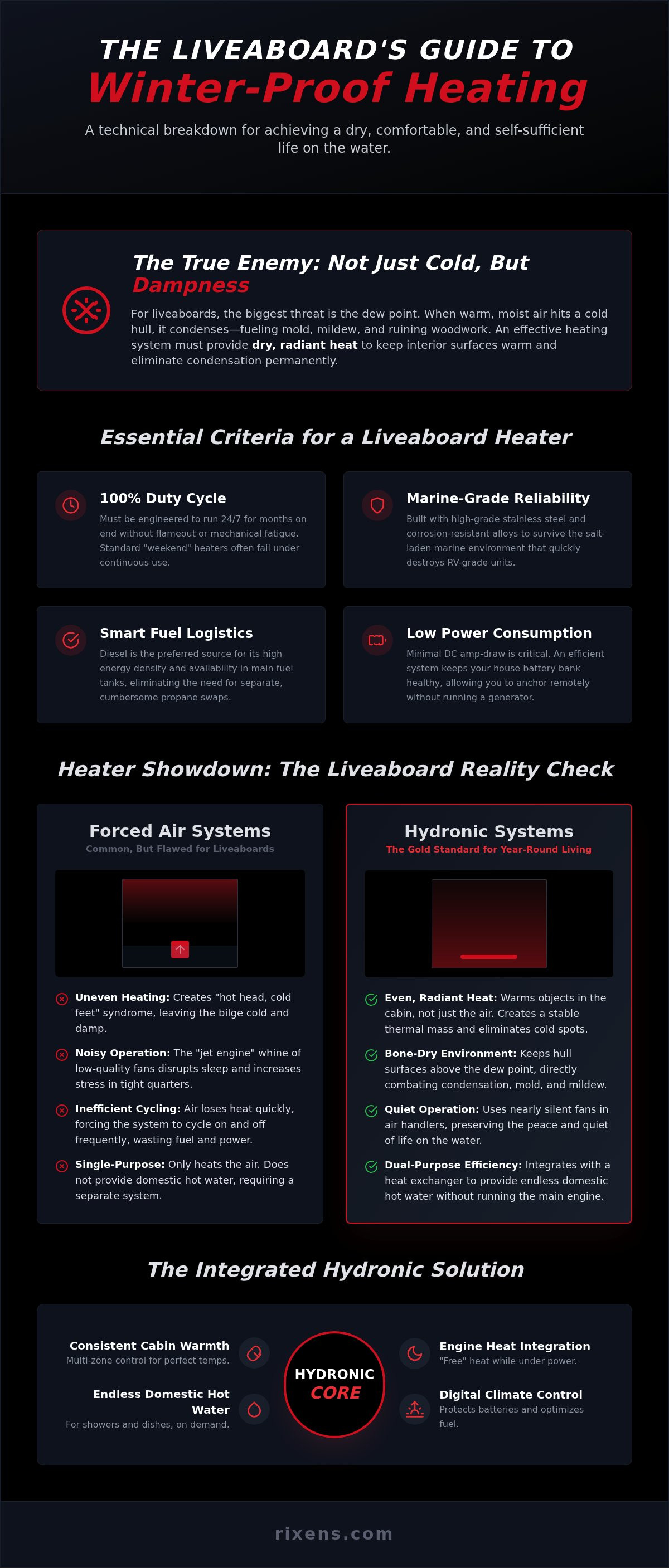
The primary enemy of a winter liveaboard isn't just the cold; it's the dew point. When warm air hits a cold fiberglass or steel hull, it condenses into water that fuels mold growth and ruins woodwork. The best boat heater for liveaboard setups solves this by providing consistent, radiant heat that warms the objects in the cabin, not just the air. This approach keeps the interior surfaces above the dew point, resulting in a bone dry environment. Proper ventilation must be integrated into this strategy to ensure fresh air exchange without losing your hard earned BTUs.
Hydronic vs. Forced Air: The Liveaboard Reality Check
Choosing the best boat heater for liveaboard life often comes down to a choice between moving hot air or moving hot liquid. Forced air systems are popular because they provide instant gratification. You flip a switch, and hot air blasts from a vent. However, this often leads to "hot head, cold feet" syndrome where the air near the ceiling is stifling while the bilge remains freezing. Hydronic systems use a glycol mixture to carry heat to quiet air handlers or radiators throughout the boat. This creates a much more stable thermal mass. Liquid retains heat far longer than air, meaning the system doesn't have to cycle on and off as frequently, saving both fuel and battery power.
The most significant advantage of hydronic heating is the integration of domestic hot water. While a forced air heater only warms the cabin, a hydronic system can pass through a heat exchanger to provide endless hot water for showers and dishes. You no longer need to run your main engine just to wash up. This dual-purpose efficiency is why seasoned cruisers view a Hydronic Heater Kit as the gold standard for year-round living. It simplifies your onboard systems by combining two essential utilities into one reliable package.
How Hydronic Systems Work on a Boat
At its core, a hydronic system is a closed-loop boiler. It circulates a heated glycol solution through flexible, insulated hoses. These hoses are much easier to route through tight lockers than bulky four-inch air ducts. One of the smartest features is the ability to tap into your engine's cooling system. While you are motoring, the engine's waste heat warms the glycol loop for free. With a digital manager like the MCS7 Controller, you can also establish multi-zone control. This allows you to keep your sleeping quarters cool while maintaining a cozy temperature in the main salon.
The True Cost of Forced Air
While forced air units have a lower initial price point, the long-term trade-offs are significant for liveaboards. High-velocity fans are loud, and in a small cabin, that constant drone impacts your quality of life. Air heaters also pull in outside air which often contains salt spray and dust. This debris can foul the internal sensors and burners over time, leading to more frequent maintenance cycles. In contrast, the internal components of a hydronic system are shielded from the cabin environment. You trade the complexity of the initial install for years of quiet, reliable operation.
Diesel, Propane, or Electric? Choosing Your Fuel Source
Deciding on a fuel source is a high-stakes decision for any liveaboard. It dictates your cruising range, your onboard safety, and your monthly overhead. For most, the search for the best boat heater for liveaboard life leads to diesel because of its incredible energy density and universal availability. Since you likely already carry diesel for your main engine, tapping into your existing tanks provides a massive reserve of heating energy without the need for additional storage lockers or specialized fittings.
Propane is often considered for its clean-burning reputation, but it presents significant challenges in a marine environment. Propane combustion produces a substantial amount of water vapor; if you use an unvented propane heater, you're essentially pumping moisture directly into your cabin. Additionally, propane is heavier than air. Any leak can settle in your bilge, creating a serious explosion risk. Electric heat is a convenient supplement when you're tied to a dock, but it's impossible to sustain while at anchor without a massive battery bank or a constantly running generator. To achieve true independence, you need a fuel source that works wherever your boat is floating.
Diesel Hydronic: The Gold Standard
Modern diesel burners are the heart of a reliable liveaboard setup. These units, found in our Hydronic Heater Kits, utilize sealed-combustion technology. This means the burner draws fresh air from outside and exhausts combustion gases back outside, keeping your cabin air safe and dry. These systems are designed to run for thousands of hours with minimal intervention. By using the boat's main fuel tank, you can maintain a comfortable interior for weeks or even months of autonomous living. It's a "set and forget" solution that provides the peace of mind necessary for deep-winter survival.
The Shore Power Trap
Many new liveaboards rely on inexpensive portable space heaters while at the marina. This is often a dangerous mistake. Marine electrical pedestals are not always designed for the continuous, high-amperage draw of multiple electric heaters; this leads to melted shore power inlets and potential fires. Furthermore, a 30-amp or 50-amp pedestal can quickly become overloaded if you're also running a battery charger and a water heater. A smarter approach is a hybrid system like the Comfort Hot. This allows you to use electric heating elements to warm your hydronic loop while at the dock, then seamlessly switch to diesel when you head out to sea. It offers the best of both worlds without the inherent risks of standalone electric units.
Sizing and Installation: Designing Your Marine Heat System
Designing the thermal envelope of your vessel requires a methodical approach that goes beyond a simple guess at BTU output. Selecting the best boat heater for liveaboard use isn't just about the burner; it's about the entire plumbing and control architecture. You must account for the thermal conductivity of your hull material and the significant heat loss that occurs through window glass and hatches. A steel hull in a northern climate, for instance, requires a much more robust output than a cored fiberglass hull with high-quality insulation. We always recommend factoring in the "cold sink" effect of the bilge, which can sap heat from the cabin floor if you don't address it during the design phase.
Once you've determined the load, placement is the next critical factor. Your heater should be mounted in a dry, accessible location that allows for a short, direct exhaust run. Exhaust safety is paramount; you must use a proper marine-grade hull fitting to prevent carbon monoxide from re-entering the cabin. Plumbing the hydronic loop also requires a steady hand. You need to ensure the glycol flow is unobstructed and that the system is designed with high points for air bleeding. Trapped air is the primary cause of pump noise and reduced heat transfer. Using flexible, pre-insulated hoses can save hours of installation time and prevent unwanted heat loss in engine rooms or lockers.
The Danger of Over-Sizing Your Heater
It's a common mistake to think that a larger heater is always better. In reality, an oversized unit will suffer from "sooting" because it never reaches its optimal operating temperature. Diesel burners are designed to run hot and clean to prevent internal fouling. Short-cycling refers to a heater turning on and off in rapid succession because it produces more heat than the cabin can absorb, causing rapid carbon buildup and burner failure. A smaller heater that runs for longer cycles at a steady state is far more efficient and requires significantly less maintenance over its lifespan. It also provides a more consistent cabin temperature, avoiding the wild swings associated with large, powerful units.
Installation Best Practices
Safety and longevity depend on the details of your installation. Your fuel pickup must be installed correctly to draw from the main tank without any risk of starving your propulsion engine of fuel. This often involves a dedicated standpipe in the tank rather than a "T" fitting in the main fuel line. We also emphasize the importance of digital management. Using a dedicated thermostat allows for precise control over your environment, saving you fuel and battery power throughout the night. To ensure your system operates at peak efficiency, we recommend integrating the MCS7 Controller Kit for precise, automated climate management.
The Rixen’s Solution: MCS One Integrated Hydronic Systems
When you commit to living on the water, you cannot afford to piece together a heating system from mismatched components. The search for the best boat heater for liveaboard life often leads to the Rixen's Enterprises, Inc. MCS One Hydronic System. We designed this unit to be the ultimate space-saving solution for vessels where every square inch of locker space is precious. By integrating cabin heating and domestic hot water into a single enclosure, we eliminate the need for separate, bulky water heaters. This streamlined approach reduces complexity and provides the consistent warmth you need for year-round comfort.
The heart of this ecosystem is the MCS7 Controller Kit. Think of it as the brain of your boat's climate. It manages your entire multi-zone system with digital precision, ensuring that your salon stays cozy while your sleeping quarters remain at the perfect temperature. This level of control is essential for managing your fuel and battery reserves effectively. Our systems are built to integrate seamlessly with professional-grade hardware like the Espar Airtronic and Hydronic burner kits. This allows us to provide a customized heating profile that matches your boat's specific layout and insulation levels, rather than a one-size-fits-all compromise.
Why the MCS One is Built for Liveaboards
Space is the ultimate luxury on boats under 50 feet. The MCS One fits into compact compartments that would be too small for traditional boilers. Because it uses a glycol loop, it operates with a level of silence that forced-air systems simply cannot match. You can enjoy a peaceful night at anchor without the disruptive cycling of a loud fan. This quiet reliability is backed by our decades of marine expertise, ensuring that your system performs flawlessly in the harshest winter environments. We prioritize durability in every component, from the internal heat exchangers to the rugged outer casing.
Long-Term Reliability and Peace of Mind
Since 1985, Rixen's Enterprises, Inc. has focused on building enduring partnerships with our customers. We aren't just selling hardware; we are providing the confidence that comes from expert guidance and master craftsmanship. While consumer-grade heaters might fail after a single season of heavy use, our professional-grade components are engineered for the long haul. Choosing a US-based team means you have access to specialized knowledge and accountability throughout the life of your hardware. We stand by every system we build, ensuring you have the support needed to maintain a bone-dry cabin and continuous hot water regardless of the outside temperature. Explore Rixen's Marine Hydronic Systems to find the right fit for your vessel.
Secure Your Winter Comfort on the Water
Transitioning to year-round life on a vessel doesn't have to mean sacrificing the warmth and convenience of a traditional home. Achieving a dry, mold-free cabin and consistent hot water depends on choosing a system built for the rigors of 24/7 use. Finding the best boat heater for liveaboard life requires moving beyond temporary fixes and investing in a hydronic ecosystem that integrates your heating and domestic water needs into one efficient unit. By prioritizing high-grade diesel components and precise digital control, you ensure your vessel remains a sanctuary even in the harshest climates.
With over 35 years of specialized heating expertise, Rixen's Enterprises, Inc. is dedicated to your long-term success. Our US-designed and manufactured systems are built with accountability in mind. As an official partner for Espar and Eberspacher systems, we provide the technical precision your project demands. Don't leave your winter comfort to chance. Design your custom liveaboard heating system with Rixen's expert guidance today. We look forward to helping you create a reliable, warm environment that you can truly call home.
Frequently Asked Questions
Is a diesel heater safe to leave running overnight on a boat?
Yes, modern marine diesel heaters are designed for continuous, overnight operation. These units use a sealed combustion chamber that draws fresh air from outside and exhausts gases through a dedicated hull fitting. This ensures no carbon monoxide enters your cabin. It's essential to have a functioning CO detector as a standard safety precaution; you can also discover inTouch R&B to implement remote monitoring and alerts for your heating and bilge systems. A properly installed marine unit is significantly safer than a portable propane or electric heater.
How much diesel does a boat heater consume per hour in winter?
Fuel consumption typically ranges from 0.03 to 0.15 gallons of diesel per hour, depending on the heat setting and outside temperature. On a medium setting, a high-quality burner might use about one gallon every 10 to 15 hours. This efficiency makes diesel the preferred fuel for the best boat heater for liveaboard users, as it allows you to maintain a warm cabin for weeks using your boat's existing fuel supply.
Can I use my boat's engine to heat the cabin while I'm moving?
Yes, you can integrate your engine's cooling system into a hydronic heating loop to provide free warmth while motoring. By installing a heat exchanger, the waste heat generated by your engine circulates through the glycol loop to warm your cabin and domestic water. This saves fuel for your primary heater and ensures the boat is already cozy by the time you reach your destination or drop anchor for the night.
What is the best heater for a 40-foot sailboat liveaboard?
A hydronic system like the MCS One is often the best boat heater for liveaboard sailors on a 40-foot vessel. This size of boat usually has multiple cabins that benefit from multi-zone control, which forced-air systems struggle to heat evenly. A hydronic setup allows you to route flexible hoses through tight lockers and provides the added benefit of domestic hot water without requiring a large, separate tank in a cramped engine room.
How do I prevent condensation on my boat during the winter?
The most effective way to prevent condensation is to maintain a consistent interior temperature above the dew point. Radiant heat from a hydronic system warms the hull and furniture, which stops moisture from air-cooling and turning into water on cold surfaces. You should also ensure adequate ventilation to exchange humid air from cooking or breathing with drier outside air, keeping your bilges and lockers bone-dry throughout the winter.
Do I need a separate water heater if I install a hydronic system?
No, you do not need a separate water heater if you install an integrated hydronic system. Units like the MCS One are designed to provide both cabin heat and domestic hot water from a single burner. This integration saves significant space in your engine room or lazarette. It also ensures you have a continuous supply of hot water for showers and dishes without needing to run your main engine or rely on shore power.
How often does a marine diesel heater require maintenance?
We recommend a basic inspection every season and a more thorough service every 1,000 to 2,000 hours of operation. Maintenance usually involves cleaning the glow pin, inspecting the fuel filter, and checking the exhaust system for any signs of soot or blockage. If you run your heater on its highest setting for 30 minutes once a month, it helps burn off carbon deposits and keeps the internal burner assembly clean and reliable.
Can I install a hydronic boat heater myself or do I need a professional?
While a skilled DIY boat owner can install a hydronic system, we generally recommend professional installation or a consultation to ensure safety and efficiency. Proper exhaust routing, fuel pickup installation, and air bleeding in the glycol loop are critical for long-term reliability. If you choose to install it yourself, utilizing a pre-engineered kit with an MCS7 Controller can simplify the process and reduce the risk of common technical errors during the setup.
