
Imagine waking up at 3 AM in a remote mountain pass to the frantic clicking of a furnace that has finally run out of propane. It is a cold, frustrating reality for many travelers who rely on traditional setups that hog space and demand constant refueling. You shouldn't have to choose between a warm cabin and a hot shower just because your appliances are fighting for the same limited fuel source. Choosing an integrated RV combination water heater and furnace solves these logistical headaches by consolidating your utility needs into one efficient, space-saving footprint.
We understand that building a reliable off-grid vehicle requires precision and a focus on long-term performance. You likely already know that traditional forced-air units are often too loud and leave cold spots in small cabins. This guide will show you how hydronic systems provide a superior alternative through silent, dry heat and engine heat recovery. You'll discover how to achieve continuous hot water and fuel flexibility using diesel or gasoline, ensuring your comfort is never tethered to a propane refill station. We will walk through the technical advantages of the MCS One and MCS7 systems to help you design a setup that stands the test of time.
Key Takeaways
- Learn how an RV combination water heater and furnace integrates heating and hot water into a single, space-saving system to maximize your interior living area.
- Discover how the MCS One Hydronic System uses a glycol heat exchanger to provide instant, continuous hot water without the need for bulky storage tanks.
- Compare the performance of diesel and gasoline fuels against propane to understand why hydronic systems are more reliable in extreme cold and high altitudes.
- See how the MCS7 Controller Kit offers precise digital management of your cabin temperature and air handler settings for a customized comfort experience.
- Gain peace of mind by choosing a system backed by over 35 years of specialized engineering and dedicated US-based support.
What is an RV combination water heater and furnace?
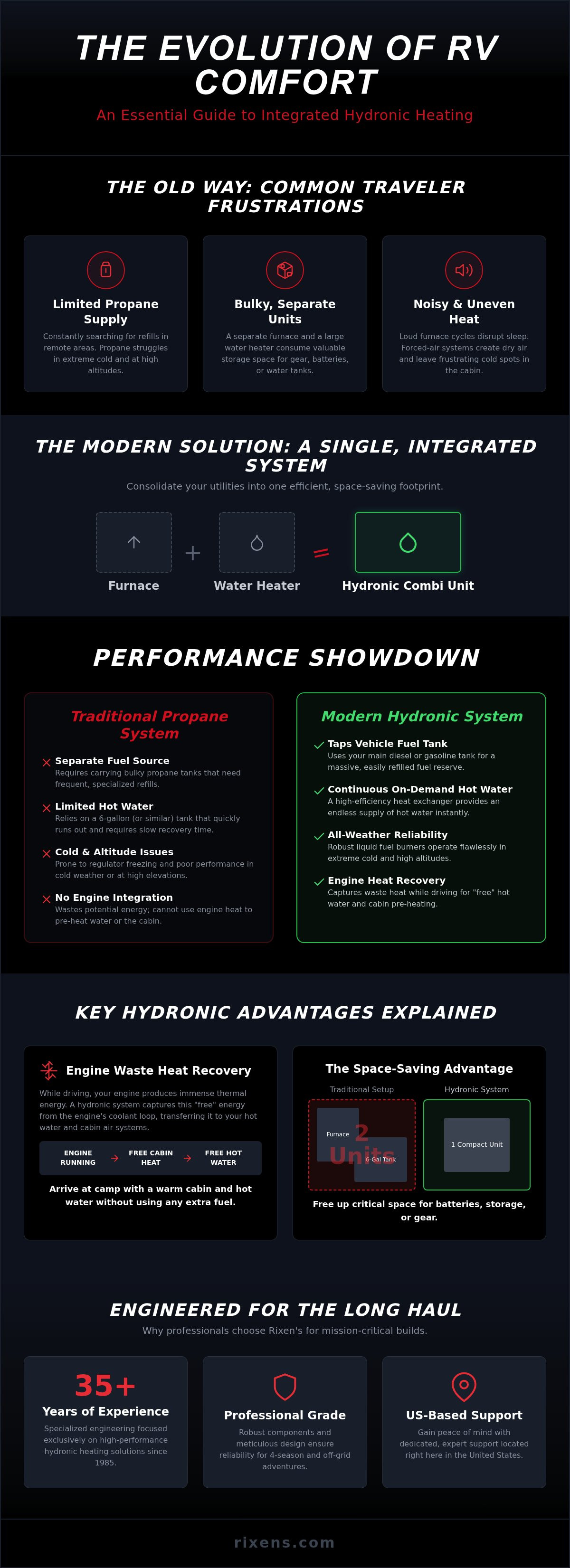
An RV combination water heater and furnace is a sophisticated, dual-purpose appliance designed to manage your entire mobile climate from a single footprint. Historically, RVers relied on archaic separate units: a bulky furnace for air and a dedicated tank for water. These independent systems often fought for space and fuel. Modern 2026 van builds have shifted toward integrated units that use a centralized burner to heat a glycol solution, which then circulates to provide both cozy cabin air and on-demand hot water.
At its core, this technology relies on a high-efficiency burner, a heat exchanger, and a small reservoir. Hydronic heating systems use liquid as a transfer medium, which is far more efficient at holding and moving heat than air alone. By using a closed-loop glycol circuit, these systems pull heat from a diesel or gasoline burner and distribute it exactly where it's needed through quiet air handlers. It's a methodical approach to comfort that mirrors the high-end heating found in luxury homes, now scaled for the rigors of the road.
Propane vs. Hydronic Combination Systems
Standard propane combination units are common in entry-level builds, but they come with significant limitations. Propane has lower energy density than liquid fuels and can struggle in extreme cold or at high altitudes due to regulator issues. Hydronic systems offer a more robust alternative by tapping directly into your vehicle's main diesel or gasoline tank. This fuel-tapping strategy is a game changer for long-term travelers. It eliminates the need to hunt for propane filling stations in remote areas and ensures you have a massive fuel reserve already on board. You'll spend less time managing fuel levels and more time enjoying the peace of mind that comes with a reliable heat source.
The Space-Saving Advantage for Van Life
Every square inch matters in a van conversion. Traditional setups often require a 6-gallon water heater and a separate furnace, which can consume a massive amount of under-seat or garage space. By consolidating these functions, you free up room for extra batteries, water storage, or gear. A centralized heating hub also allows for better weight distribution, as the compact unit can be mounted low and close to the chassis. We've found that this streamlined architecture simplifies the plumbing and electrical runs, reducing the potential for future failure points. A hydronic combo is the gold standard for 4-season builds because it provides silent, dry heat and endless hot water within a single, space-saving unit.
How the MCS One Hydronic System Revolutionizes RV Heating
The MCS One Hydronic System represents a significant leap forward in mobile utility design. It doesn't just combine two appliances; it integrates them into a single, compact architecture that prioritizes long-term reliability. By utilizing a high-performance glycol heat exchanger, the system provides instant and continuous hot water. You won't have to wait for a 6-gallon tank to recover after a short shower. This setup is fully compatible with Espar/Eberspacher Airtronic and Hydronic heater kits, allowing for a professional-grade installation that taps directly into your vehicle's existing fuel system.
One of the most immediate benefits travelers notice is the silence. Traditional propane furnaces often sound like a jet engine cycling on and off throughout the night, disturbing your sleep. In contrast, the MCS One operates with a whisper-quiet hum, using specialized air handlers to distribute warmth evenly throughout the cabin. This methodical approach to climate control is why many professional builders view it as the ultimate RV combination water heater and furnace. When researching your options, checking the EPA on hydronic heaters can provide broader context on why liquid-based heat transfer is the gold standard for high-efficiency heating applications.
Engine Waste Heat Recovery Explained
While you're driving, your engine generates a massive amount of thermal energy that usually goes to waste through the radiator. The MCS One captures this energy via a heat exchanger connected to your engine's coolant loop. This means you can arrive at your destination with a full reservoir of hot water and a pre-warmed cabin without burning a drop of extra fuel. It's essentially "free" heat that maximizes the utility of your vehicle's mechanical output. This level of integration is something standard propane units simply cannot offer, providing you with greater independence during long transit days.
Electric Heating Elements for Shore Power
For those times when you're plugged into shore power at a campground or using a generator, the system includes 120V AC electric elements. This allows you to maintain your cabin temperature and hot water supply while conserving your diesel or gasoline. The system is designed for intelligence; it can automatically switch between fuel and electric sources based on availability. This redundancy ensures that you're never without comfort, regardless of your camping environment. If you're ready to upgrade your rig with a more dependable solution, exploring the MCS One Hydronic System is the first step toward true off-grid independence.
Comparing Performance: Hydronic vs. Forced Air Propane
Choosing an RV combination water heater and furnace often comes down to a choice between traditional propane and modern hydronic technology. While propane is a common entry point for many campers, it lacks the energy density required for serious four-season travel. Diesel and gasoline provide significantly more BTUs per gallon than propane. This means your system doesn't have to work as hard to maintain a comfortable temperature when the mercury drops below zero. This efficiency translates directly to long-term reliability and lower fuel consumption during extended off-grid stays.
High-altitude performance is another critical differentiator that we often discuss with our clients. Propane regulators are notorious for failing or freezing when you cross high mountain passes. In contrast, the systems we design are compatible with high-altitude kits that automatically adjust the fuel-to-air ratio. This ensures a clean burn and consistent heat whether you're at sea level or 10,000 feet. Maintenance is also more straightforward with a hydronic loop. Because the system is closed and uses glycol, you aren't dealing with the soot and moisture buildup common in the combustion chambers of forced-air propane furnaces.
Noise and Comfort Levels
Standard propane furnaces are famous for their loud ignition clicks and the sudden blast of air that wakes up light sleepers. Hydronic air handlers utilize a silent start process that gently ramps up fan speeds. By using the MCS7 Controller Kit, the system maintains a consistent glycol temperature rather than cycling through jarring hot and cold peaks. This steady warmth is much more comfortable for pets and helps prevent the dry, itchy skin often caused by the parched, dusty air of a propane furnace. You'll enjoy a more radiant-style warmth that feels like a home heating system rather than a noisy industrial blower.
Fuel Logistics for Long-Term Travelers
Logistics can be the biggest hurdle for international or remote travel. Finding a propane refill station that matches your specific tank fittings in a foreign country is a common headache that can cut a trip short. By tapping into your vehicle's primary fuel tank, which usually holds 20 or more gallons, you gain weeks of autonomy. You'll never have to worry about an external propane tank leak or the safety concerns of under-mounted gas lines. This integration provides a level of security and freedom that separate appliances simply cannot match, allowing you to focus on the journey rather than your next fuel stop.
Designing Your System: Controls and Air Handlers
Designing an RV combination water heater and furnace requires a methodical approach to ensure every component works in harmony. It's about more than just selecting a heater; it's about the intelligence that manages the system and the hardware that delivers warmth to your living space. We focus on creating a balanced loop where the BTU output, which can reach up to 17,000 BTUs in our MCS7 configurations, matches the specific insulation and square footage of your vehicle. This precision ensures your system doesn't short-cycle, which preserves the longevity of the burner and the fuel pump over years of travel.
Choosing the right air handlers is the next step in your design journey. For a standard 144-inch wheelbase van, a single large air handler might suffice, while a 170-inch extended build often benefits from multiple smaller units to eliminate cold spots in the garage or sleeping areas. If you want the ultimate luxury experience, integrating hydronic floor heat into the loop provides a consistent, radiant warmth that keeps your feet comfortable even in sub-zero temperatures. This addition turns a standard van into a true four-season home by providing a thermal mass that holds heat long after the air handlers stop spinning.
Smart Climate Management with the MCS7
The MCS7 Controller Kit acts as the brain of your installation. It provides a single digital interface to monitor glycol levels and heater status, removing the guesswork from system management. This controller automates the complex transitions between engine heat recovery, fuel-burning modes, and electric shore power. You can also customize fan speeds for whisper-quiet night operation, ensuring your sleep isn't interrupted by mechanical noise. It is this level of specialized knowledge built into the hardware that provides the peace of mind you need when camping in remote environments.
Placement and Ducting Strategies
Proper placement of your air handlers is essential for even heat distribution. We recommend mounting them low in the cabinetry to allow heat to rise naturally through the cabin. It's also vital to shorten water lines wherever possible to minimize "dead water" and reduce thermal waste. During your build, you should also consider accessibility for maintenance. Following a Rixen's winterization checklist will protect your components from freezing damage when the rig is in storage. If you're ready to map out your specific layout, you can view our full range of MCS7 Controller Kits and Air Handlers to find the perfect fit for your build. Our kits are designed for a high degree of customization, allowing you to scale the hardware to your specific adventure needs.
Why Rixen’s is the Professional Choice for RV Heating
Rixen's Enterprises, Inc. has specialized in hydronic solutions since 1985, recently celebrating our 40th anniversary in March 2026. This longevity represents four decades of perfecting the RV combination water heater and furnace for the most demanding environments. While some builders consider importing components from overseas, choosing a US-based partner provides accountability and support that international retailers can't match. We design and manufacture our core components here, ensuring every system meets our high standards for durability and performance.
Our commitment to long-term reliability is why full-time travelers trust our hardware for their off-grid homes. Unlike mass-market appliances that take a "one size fits all" approach, we provide custom-tailored kits designed for your vehicle's specific thermal needs. This specialized knowledge ensures your heating loop is optimized for efficiency, which reduces wear on your fuel pump and burner. We pair every high-performance system with a promise of ongoing technical support, giving you a steady partner for the life of your rig.
Consultative Support for DIY and Professional Builders
We act as a reliable guide for both solo DIYers and professional upfitters. A custom-designed system beats an off-the-shelf combo unit because it accounts for your unique floor plan, insulation, and water usage. You gain access to specialized parts and expert troubleshooting that helps reduce the stress of complex technical decisions. For those looking to complete their utility solution, we can integrate the Overland Shower directly into your hydronic loop. This provides the same continuous hot water for external use that you enjoy inside the cabin, all while utilizing the same efficient burner.
Getting Started with a Rixen's Enterprises, Inc. Hydronic Kit
The process begins with a professional consultation to determine your specific BTU requirements and plumbing layout. We don't just sell you a box of parts; we work with you to ensure the installation is methodical and thorough. If you aren't comfortable with the installation yourself, we can help you find certified installers who specialize in complex hydronic setups. This intentional approach creates a sense of security, showing that every detail has been considered for your success. You can Explore Rixen's Enterprises, Inc. MCS One Hydronic Systems today to start designing a setup that provides the peace of mind you deserve on the road.
Step Into a New Standard of Mobile Comfort
Transitioning from fragmented, noisy propane appliances to a unified hydronic loop simplifies your build while maximizing every inch of interior space. You've seen how tapping into your vehicle's existing fuel source provides weeks of off-grid autonomy and how silent air handlers protect your sleep from jarring mechanical cycles. An integrated RV combination water heater and furnace isn't just a luxury; it's a foundational component for reliable, year-round travel. It's about ensuring that your home on wheels remains a sanctuary, regardless of the temperature outside or the altitude of your campsite.
Our systems are engineered for high-altitude performance and managed by the industry-leading MCS7 digital controller to ensure your comfort never wavers. We pride ourselves on being more than just a hardware provider; we're your partners in long-term reliability. Upgrade your RV with a Rixen's Hydronic Heating System and experience the difference that 40 years of specialized expertise makes. With expert US-based technical support standing behind every installation, you can focus on the road ahead with absolute confidence. Your next adventure deserves the stability of a system built to last.
Frequently Asked Questions
Can an RV combination water heater and furnace run while I'm driving?
Yes, you can safely operate your hydronic system while the vehicle is in motion. In fact, using the engine heat recovery feature allows the system to scavenge waste heat from your engine's coolant loop, providing a warm cabin and hot water upon arrival without burning any additional fuel. This makes the RV combination water heater and furnace an incredibly efficient choice for long transit days through cold climates.
How much diesel or gasoline does a hydronic combo unit consume per hour?
Fuel consumption varies based on the heat load, but typically ranges from 0.03 to 0.15 gallons per hour. On a standard winter night, most users find they burn less than a gallon of fuel to maintain a comfortable interior temperature. This high energy density is a major advantage over propane, as it allows you to utilize your vehicle's large primary fuel tank for weeks of off-grid autonomy.
Do I need to winterize a hydronic heating system?
Winterizing the domestic water side of the system is essential, even though the heating loop is protected. While the closed-loop glycol solution is rated for sub-zero temperatures and won't freeze, the fresh water inside the heat exchanger or reservoir can still expand and cause damage. We recommend a simple process of draining the domestic lines or using food-grade RV antifreeze to protect your investment during storage.
Can I add radiant floor heating to a combination water heater system?
Adding radiant floor heating is one of the most popular upgrades for a hydronic setup. Because the system uses a circulating liquid medium, you can easily extend the loop through PEX tubing beneath your subfloor. This provides a consistent, radiant warmth that eliminates cold spots and keeps your feet comfortable; it is a luxury that standard forced-air propane furnaces simply cannot replicate in a mobile environment.
What is the lifespan of a hydronic RV heater compared to a propane furnace?
A well-maintained hydronic system typically lasts 10 to 15 years, significantly outperforming standard propane units. Traditional furnaces often suffer from internal corrosion and thin-walled heat exchangers that fail within 5 to 8 years of heavy use. By investing in professional-grade hardware and performing basic annual burner maintenance, you ensure your RV combination water heater and furnace remains a reliable partner for the long haul.
Is it possible to install a Rixen's system in a gasoline-powered Transit or ProMaster?
Our systems are fully compatible with both diesel and gasoline-powered vehicles like the Ford Transit or RAM ProMaster. We utilize gasoline-specific heater kits from Espar/Eberspacher that tap directly into your van's main fuel tank. This ensures that gasoline owners can enjoy the same space-saving benefits and continuous hot water as diesel owners without needing to carry a secondary fuel source like a heavy propane tank.
How long does it take for a combo unit to provide hot water from a cold start?
From a completely cold start, it typically takes 10 to 20 minutes for the glycol loop to reach its operating temperature. Once the system is heat soaked, you'll have access to instant, continuous hot water through the heat exchanger. If you've been driving and utilizing the engine heat recovery feature, the water will be hot the moment you park, providing immediate comfort after a long day of travel.
Can I use the furnace without having water in the tank?
Running the furnace for cabin heat is possible even if your domestic water system is empty. The glycol heating loop is a closed circuit that is physically separate from the fresh water lines. This design allows you to stay warm during dry camping trips or in the early spring before you've fully commissioned your water system for the season, providing year-round versatility for your rig.
