
What if your boat felt less like a damp cabin and more like a high-end coastal home, regardless of the temperature outside? Most sailors and powerboaters accept that boat life means dealing with a noisy marine diesel heater system that dries out the air and showers that run cold just as you're getting comfortable. You have likely spent nights listening to a cycling fan while still feeling a chill in the far corners of your vessel. It is a common frustration, but it doesn't have to be your reality on the water.
This guide shows you how to achieve residential-grade comfort using advanced hydronic technology. By moving away from standard forced air, you can enjoy quiet, consistent radiant heat and on-demand hot water that never runs out. We will explore the benefits of specialized hardware like the MCS One and MCS7 controller, showing you how to reclaim engine waste heat to save fuel. From understanding heat load to ensuring your system lasts for decades, we're here to provide the expert guidance you need for total peace of mind in any climate.
Key Takeaways
- Learn how a modern marine diesel heater system uses a hydronic glycol loop to provide consistent cabin warmth, domestic hot water, and engine pre-heating.
- Discover why closed-loop liquid systems offer superior thermal retention and fuel efficiency compared to traditional forced-air heaters.
- Understand the benefits of zoned climate control and whisper-quiet operation for a more comfortable, residential-grade living experience on the water.
- Find out how to accurately size your heating requirements and why the MCS7 Controller Kit is the key to managing complex hydronic hardware.
- Explore the advantages of a consultative design approach and why a custom-configured hydronic heater kit is the foundation of long-term vessel reliability.
What is a Marine Diesel Heater System? Understanding the Hydronic Difference
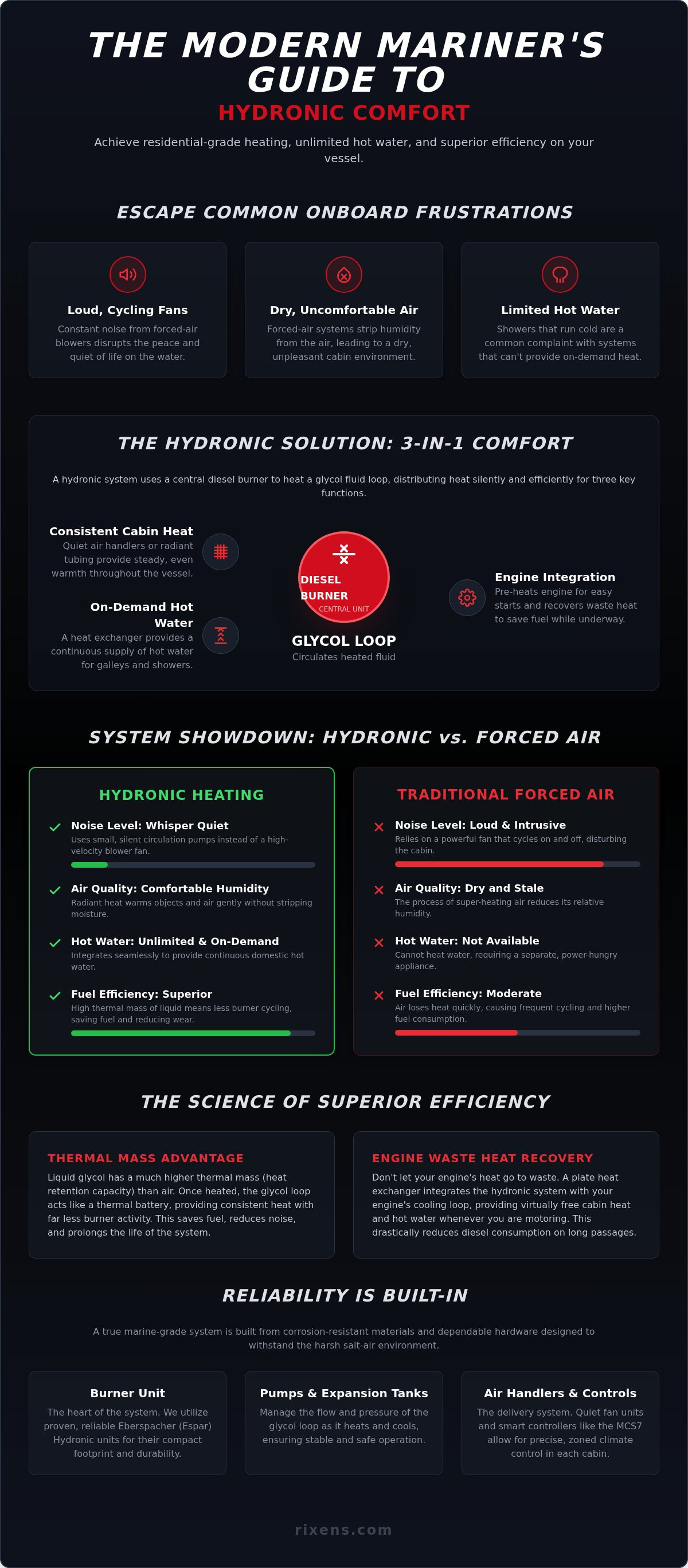
A marine diesel heater system is more than just a furnace for your vessel; it's a sophisticated thermal management network. Unlike basic air heaters, a hydronic system uses a diesel burner to heat a mixture of glycol and water. This heated fluid circulates through a closed-loop network of pipes to various parts of your boat. It's essentially a centralized boiler that provides a steady, radiant warmth similar to a modern residential home.
This technology rests on three functional pillars that define the liveaboard experience. First, it provides consistent cabin heating through quiet air handlers. Second, it generates domestic hot water for showers and galleys via a heat exchanger. Finally, it can pre-heat your vessel's engine, reducing wear during cold starts and improving overall longevity. By integrating these three tasks into one unit, you reduce the need for separate, power-hungry appliances.
Choosing a true marine-grade system is vital because of the harsh salt-air environment. These systems utilize corrosion-resistant materials and specialized exhaust components designed to handle the unique backpressure and safety requirements of a boat's hull. At the heart of this process is the heat exchanger, which acts as the bridge between the hot glycol loop and your living space, efficiently transferring energy without ever mixing the fluids.
Hydronic vs. Forced Air: A Quick Comparison
Forced air systems are popular because they provide a quick blast of heat, but they come with significant trade-offs. They're often noisy, as large fans must move high volumes of air through bulky ducting. This process also tends to dry out the cabin air, making the environment less comfortable over long periods. In contrast, a hydronic system provides silent, consistent heat that doesn't sap the humidity from your living space.
- Noise levels: Hydronic systems use small, quiet circulation pumps rather than high-velocity blowers.
- Hot water: Forced air cannot heat your shower water; a hydronic system does it on demand.
- Power consumption: While the initial startup draw is similar, hydronic systems often prove more efficient for long-term liveaboards by retaining heat in the liquid loop longer than air-based alternatives.
The Core Components of a Marine System
A reliable marine diesel heater system depends on high-quality hardware working in harmony. We focus on integrating the most dependable components into our custom kits to ensure your comfort is never interrupted. The primary parts include:
- The Burner Unit: We utilize Eberspacher (Espar) Hydronic units for their proven reliability and compact footprint.
- Circulation Pumps and Expansion Tanks: These manage the flow and pressure of the glycol mixture as it expands and contracts with temperature changes.
- Air Handlers and Radiant Tubing: These components distribute the heat into each cabin, allowing for precise temperature control.
The Science of Marine Hydronic Heating: Efficiency and Integration
Efficiency on a vessel is measured by how much comfort you gain from every drop of fuel. A marine diesel heater system using hydronic technology excels here because liquid glycol has a much higher thermal mass than air. Once the system reaches its operating temperature, the circuit retains that heat for a significant period. This inherent stability reduces the frequency of the burner cycling on and off, which is the primary cause of mechanical wear and fuel waste in less sophisticated setups.
Diesel is the ideal energy source for remote cruising. It's already on board, it's incredibly energy-dense, and it remains stable in various conditions. When you integrate a compact, all-in-one solution like the MCS One Hydronic System, you're centralizing your heat and hot water into one efficient footprint. This methodical approach to thermal management ensures that your boat stays warm without the constant electrical drain required by large fans or electric heating elements.
Engine Waste Heat Recovery Explained
Your propulsion engine is a massive source of energy that usually disappears through the exhaust or raw water cooling. We can capture this energy by installing a plate heat exchanger, which acts as a bridge between your engine’s cooling loop and your cabin’s heating loop. While you're motoring to your next destination, the engine provides free heat to your cabins and hot water tank. This integration means your diesel burner doesn't need to fire up while underway, which extends the lifespan of your equipment and saves your fuel for when you're at anchor.
Domestic Hot Water on Demand
Traditional marine water heaters often rely on bulky 6-gallon tanks that run cold just as you're finishing a long day on deck. A hydronic loop changes this dynamic entirely. Because the system is designed to transfer heat rapidly through a dedicated exchanger, you can enjoy continuous hot water as long as the system is active. We've even adapted our Overland Shower concept for marine use, ensuring that a hot shower is a reliable luxury rather than a timed race. This setup removes the need for high-draw electric heaters that often require running a generator or draining your battery banks.
Why Hydronic Heating is the Ultimate Choice for Liveaboards
Living full-time on a vessel demands a level of reliability and comfort that standard equipment often fails to provide. When you choose a marine diesel heater system with a hydronic core, you're investing in a residential-grade environment. The most immediate change you'll notice is the silence. Because the system relies on small liquid pumps rather than high-velocity air blowers, you won't be woken up by a roaring fan every time the thermostat cycles. This whisper-quiet operation is a game-changer for light sleepers and those who value a peaceful cabin atmosphere.
Beyond noise reduction, hydronic systems offer the luxury of zoned climate control. We understand that every boat has its own micro-climates; the v-berth might be freezing while the galley is warm from cooking. Our systems allow you to tailor the temperature in each cabin independently. You can also choose how that heat is delivered. Whether you prefer the sleek look of modern radiators, the efficiency of fan-forced air handlers, or the ultimate luxury of heated floors, a hydronic setup adapts to your interior design rather than dictating it.
Safety is another area where this technology shines. By keeping the combustion process and fuel lines in a dedicated locker or the engine room, we ensure that no exhaust gases or raw fuel ever enter your living space. This separation provides a level of security that bulkhead heaters or basic portable units simply cannot match. It's about giving you the confidence to sleep soundly, knowing your heating source is safely isolated from your sleeping quarters.
Solving the Humidity Problem
Sailors often struggle with condensation that drips from hatches and dampens cushions. Forced air heaters can sometimes exacerbate this by circulating dust and unevenly heating the air. A hydronic marine diesel heater system provides steady, radiant warmth that heats the hull and furniture directly. This consistent temperature prevents the "cold spot" effect where moisture likes to collect. It protects your fine woodwork from the stresses of extreme temperature swings and keeps the air quality high by minimizing the movement of allergens throughout the boat.
The Longevity Factor
We've been designing these systems since 1985, and we know that boaters need hardware that lasts for decades, not just a few seasons. Hydronic components are inherently modular and built to higher standards than entry-level air heaters. If a pump or an air handler eventually needs service, you can replace that specific part without tearing out the entire system. Our commitment to long-term support means you'll have access to specialized knowledge and parts whether you're in a local marina or a remote anchorage. This durability ensures your investment pays off over many years of reliable service.
Choosing and Configuring Your Marine Diesel System
Selecting a marine diesel heater system requires a more nuanced approach than simply matching a unit to your boat's length. While many general guides suggest BTU ratings based solely on square footage, a professional configuration must account for your vessel's insulation quality, window surface area, and your specific hot water demands. A vessel intended for extended cold-weather cruising needs a significantly different setup than one primarily used for shorter trips in temperate zones. We help you calculate these thermal loads to ensure your system provides enough energy for both cabin warmth and consistent domestic hot water without being inefficiently oversized.
The core of your system is the burner unit. We primarily integrate Eberspacher (Espar) hardware due to its legendary reliability. For those seeking the hydronic comfort we have discussed, a Hydronic burner is the standard. However, some smaller vessels or specific layouts might benefit from our Airtronic Heater Kits if domestic hot water isn't a priority. The choice between these units depends on how you use your boat and whether you want to integrate engine waste heat recovery into your daily routine.
Control is Everything: The MCS7 Advantage
A sophisticated heating loop is only as good as the brain that manages it. This is why we developed the MCS7 Controller Kit. Unlike basic thermostats that simply turn a burner on or off, the MCS7 provides digital precision for complex hydronic operations. It manages multi-zone heating, domestic hot water priority, and pump speeds from a single, user-friendly interface. It allows you to monitor your system's performance and maintain exact temperatures in every cabin. If you want total mastery over your vessel's climate, you can explore the MCS7 Controller Kit to see how it simplifies professional-grade thermal management.
Installation Essentials
A successful installation focuses on safety and longevity. Because a marine diesel heater system involves combustion, the exhaust routing is the most critical step. We utilize high-quality hull skin fittings and insulated exhaust piping to ensure gases are vented safely away from the cabin. Fuel integration is equally important; we recommend a dedicated fuel pickup from your main diesel tank to prevent air bubbles from interrupting the burner's cycle. When plumbing the glycol loop, using the right reinforced tubing and high-temp insulation ensures that the heat reaches your air handlers rather than escaping into the bilge. These technical details are what separate a DIY project from a system that provides decades of reliable service.
Implementing Your Rixen’s Marine Heating Solution
Installing a marine diesel heater system is a significant investment in your vessel's long-term liveability. At Rixen's Enterprises, Inc., we don't view this as a simple transaction of hardware. Instead, we approach every project as a consultative partnership. Since 1985, we've learned that no two boats are plumbed or insulated exactly the same way. A generic, off-the-shelf kit often leads to installation headaches and performance gaps. Our process ensures that the system you receive is specifically engineered for your hull's unique geometry and your personal cruising goals.
When you receive a comprehensive kit from us, you're getting more than just a burner and some hose. You are getting a synchronized network of high-performance components, including Eberspacher (Espar) units and our proprietary control technology. We also prioritize readiness for the unexpected. Whether you are navigating high-altitude lakes or facing extreme northern winters, we calibrate your hardware to handle the thinner air and lower temperatures that cause lesser systems to fail. Our team remains available to provide technical guidance throughout the installation process, ensuring you have total confidence in your setup before you leave the dock.
Designing Your Custom System
The journey to a warm cabin begins with a detailed consultation. We work with you to map out your vessel’s thermal needs, identifying where plumbing runs will be most efficient and where air handlers should be placed for maximum effect. During this phase, we can discuss integrating Comfort Hot into your loop. This addition is a favorite for cruisers who spend time at marinas, as it allows you to use an electric element for heat and hot water when shore power is available. This flexibility saves your diesel fuel for when you're truly off-grid, providing an extra layer of utility to your marine diesel heater system.
Next Steps for Total Vessel Comfort
As you move toward implementation, it's important to review your vessel's total power budget. While hydronic systems are efficient, you'll want to ensure your house battery bank is sized to handle the circulation pumps and air handler fans during extended stays at anchor. We also help you plan for the future with simple seasonal maintenance routines and winterization steps that protect your investment. If you're ready to move away from noisy, inconsistent heat and toward a professional-grade solution, you can consult with Rixen's Enterprises, Inc. experts to design your marine hydronic system today. We’re here to ensure your project is a success from the first sketch to the first warm night on the water.
Achieving Year-Round Comfort on Your Vessel
Transitioning to a high-performance marine diesel heater system is the most significant upgrade you can make for your vessel's liveability. Throughout this guide, we've explored how hydronic technology replaces the noise and dry air of forced-air units with silent, radiant warmth and unlimited hot water. By utilizing engine waste heat and smart thermal management, you gain a level of efficiency that standard systems simply can't provide. It's about turning your boat into a true year-round home that remains comfortable in any climate.
At Rixen’s, we bring over 35 years of specialized heating expertise to every project. Our custom-engineered kits are designed to withstand the rigors of the marine environment, powered by our proprietary MCS7 digital control technology for precise management of your cabin's climate. We don't just sell hardware; we provide the ongoing support and technical guidance necessary to ensure your system performs flawlessly for decades. If you're ready to experience residential-grade warmth on the water, Explore Rixen’s Marine Hydronic Systems to find the perfect configuration for your needs. We're here to help you navigate these technical decisions and look forward to being your partner in achieving total peace of mind.
Frequently Asked Questions
How much diesel does a marine hydronic heater consume per hour?
A typical hydronic heater consumes between 0.03 and 0.15 gallons of diesel per hour depending on the current heat load. During the initial startup phase, the burner runs at a higher rate to reach operating temperature; it then throttles down once the glycol loop is warm. This efficiency makes it a sustainable choice for long-term cruising without the need for constant refueling.
Can I install a diesel heater system myself on my boat?
You can install a marine diesel heater system yourself if you have strong mechanical and electrical skills. These systems involve complex fuel, exhaust, and plumbing integrations that require precision for safety and hull integrity. We provide detailed technical guidance and custom-engineered kits to support DIY installers, ensuring your setup meets professional standards for reliability and performance.
Is a marine diesel heater safe to run while I am sleeping?
It is safe to run a professionally installed diesel heater while you sleep. Modern units feature multiple safety sensors that automatically shut down the system if they detect flame failure, overheating, or low voltage. We always recommend installing a high-quality carbon monoxide detector in every sleeping cabin as a standard safety precaution for any vessel using combustion-based heating.
Do I need a separate tank for my marine diesel heater?
Most boat owners do not need a separate fuel tank for their marine diesel heater system. The burner typically draws directly from the vessel's main diesel tank using a dedicated fuel pickup or standpipe. This setup ensures the heater has a reliable fuel supply without the need for manual refilling of a secondary tank; though a separate small tank remains an option for those using alternative fuels.
What is the difference between a diesel air heater and a hydronic heater?
A diesel air heater warms the cabin by blowing hot air through large ducts, while a hydronic heater warms a glycol-water mixture. This heated liquid then circulates to quiet air handlers or radiators. The primary advantage of the hydronic approach is its ability to provide domestic hot water and engine pre-heating, which air-only systems cannot do.
How often does a marine diesel heater system require maintenance?
We recommend an annual inspection and basic service to keep your system running efficiently. This usually involves cleaning the glow pin, inspecting the fuel filter, and checking the exhaust system for any signs of soot or blockage. Running the heater for at least 20 minutes once a month, even during summer, helps prevent fuel from gumming up the internal components.
Can a hydronic system heat my boat engine before I start it?
A hydronic system can certainly heat your boat engine before startup. By integrating a heat exchanger between the heater loop and the engine’s cooling circuit, the system transfers warmth to the engine block. This reduces wear during cold starts and can even provide free cabin heat while you are motoring by reclaiming waste energy from the engine.
Will a diesel heater work at high altitudes or in very thin air?
Modern diesel heaters will work at high altitudes, though thin air can affect the combustion mixture. Many of our kits include an integrated altitude sensor or a manual adjustment feature that compensates for lower oxygen levels. This ensures the burner continues to operate cleanly without excessive soot buildup when you are cruising in mountainous regions or high-altitude lakes.
