
Why should venturing into the wild mean sacrificing the basic comfort of a reliable, steaming shower? For many explorers, an off-road hot water shower kit is often a source of frustration rather than luxury, frequently plagued by low pressure, freezing components, or the sudden realization that the propane tank is empty mid-lather. You've likely spent enough time troubleshooting temperamental portable gear to know that "good enough" rarely holds up when you're miles from the nearest paved road.
We believe that off-grid comfort should be a permanent utility, not a temporary chore. You deserve a system that works as hard as your vehicle does. In this guide, you'll discover how to move beyond plastic portable units and achieve true, endless hot water through professional hydronic systems. We'll walk you through the technical advantages of integrating your shower with your vehicle's heating system, ensuring your setup remains dependable in sub-zero temperatures and high altitudes. From the mechanics of the MCS One to the long-term reliability of the Overland Shower, you're about to learn how to build a system that provides total peace of mind every time you turn the tap.
Key Takeaways
- Learn how an integrated off-road hot water shower kit provides consistent, pressurized water that outperforms traditional solar bags and portable setups.
- Understand the efficiency of hydronic heating, which uses your vehicle's fuel and thermal energy to provide endless hot water without the need for propane.
- Discover why marine-grade stainless steel components and 12V DC integration are essential for a system that survives rugged terrain and freezing temperatures.
- Gain professional insights into planning your plumbing and component placement to prevent heat loss and ensure peak performance in high altitudes.
- Explore how specialized systems like the MCS One and Overland Shower create a seamless, four-season utility for high-end vehicle builds.
Understanding Off-Road Hot Water Systems: Beyond the Gravity Bag
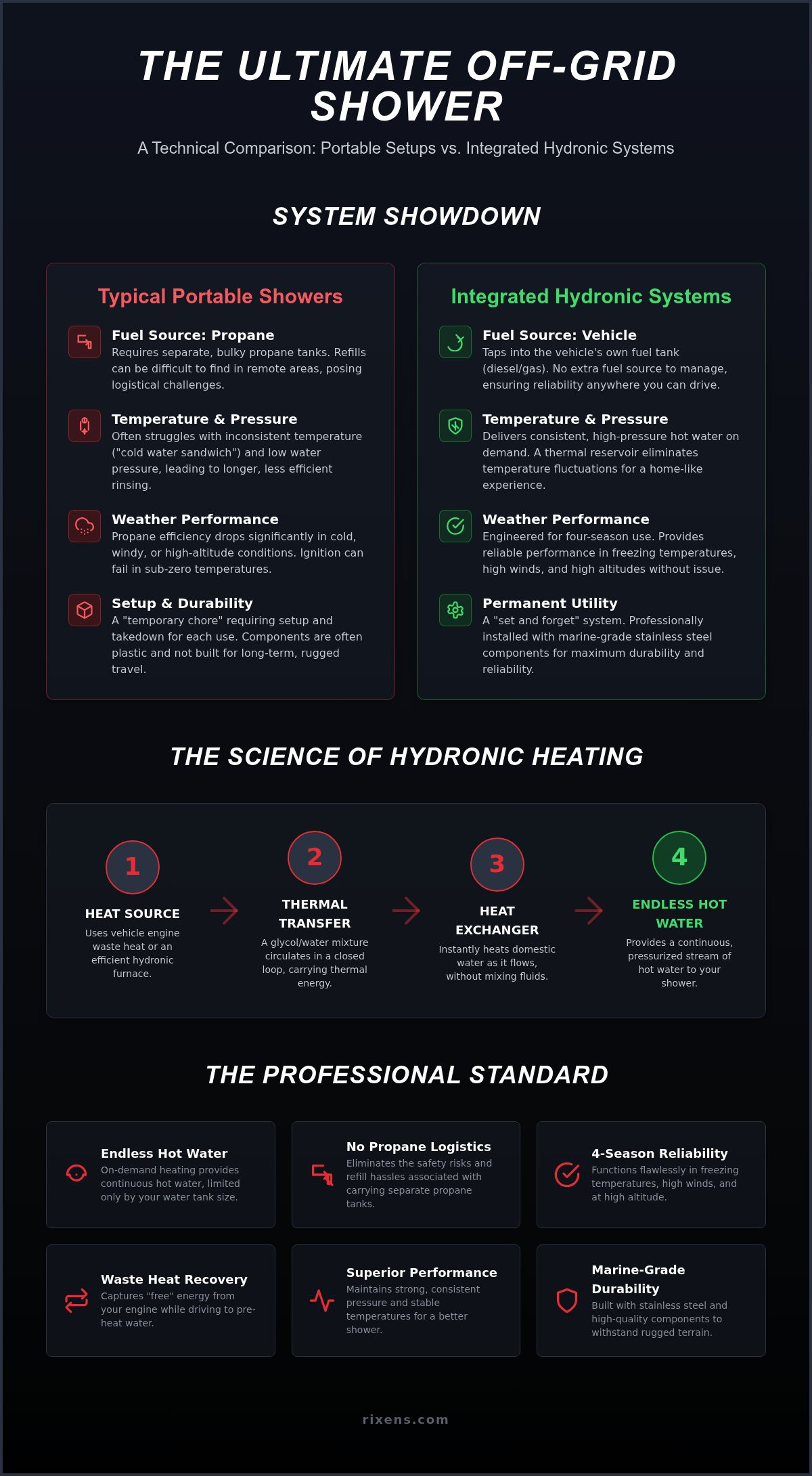
An off-road hot water shower kit is more than just a luxury item. It's a critical piece of infrastructure for any serious traveler. In its simplest form, this system provides pressurized, temperature-controlled water in places where utilities don't exist. We've seen the evolution of off-grid hygiene firsthand. It began with simple black solar bags that relied on gravity and a sunny afternoon. Today, the industry has shifted toward sophisticated, integrated hydronic systems that offer the same consistency you'd expect in a modern home.
The primary differentiator between a basic camping setup and a professional overlanding build is temperature stability. If your water temperature fluctuates every time the wind blows or the pump cycles, you aren't really relaxing. Reliable systems often mirror the logic found in point-of-use tankless water heaters, focusing on heating water immediately as it flows. High-quality kits also prioritize water pressure. Strong pressure doesn't just feel better; it actually helps you conserve water by rinsing soap away faster. This efficiency is vital when you're managing a limited onboard tank during a remote expedition.
Portable vs. Integrated: Which Path is Yours?
Choosing the right off-road hot water shower kit depends on how you use your vehicle. Portable kits are excellent for weekend warriors who need a quick solution they can pack away in a garage between trips. However, if you're building a rig for long-term travel or rugged four-season use, an integrated system is the standard. These permanent installs require you to assess your vehicle's available space and 12V power capacity. While they involve a more technical initial setup, the result is a seamless utility that's always ready. You won't have to spend twenty minutes setting up hoses every time you want to wash off the day's trail dust.
The Limitations of Propane-Only Solutions
Many travelers start with propane-powered heaters, but they often encounter significant logistical hurdles. Carrying pressurized gas tanks inside a small vehicle poses safety risks; finding refill stations in remote areas can be a constant worry. Environmental factors also play a huge role. Cold temperatures and high winds can drastically reduce the efficiency of a propane burner, sometimes preventing it from igniting at all. For those seeking peace of mind in high altitudes or freezing climates, relying on a fuel source that struggles in the cold isn't the most reliable strategy. A master craftsman knows that true reliability comes from systems that tap into the vehicle's own resources rather than external, finite fuel tanks.
The Science of Hydronic Heating: Constant Hot Water Without Propane
Most off-road enthusiasts are familiar with the hiss of a propane burner, but the most reliable way to secure a hot shower is through hydronic technology. Unlike simple on-demand heaters, a professional-grade off-road hot water shower kit utilizing hydronics creates a thermal reservoir. This process uses a specialized mixture of glycol and water to carry thermal energy through a closed loop. The fluid passes through a heat exchanger, transferring its warmth to your domestic water supply without ever mixing the two fluids. This method is the foundation of high-efficiency hydronic heating systems, providing a stable, high-output thermal source that doesn't fluctuate with changes in water flow.
One of the most significant advantages of this setup is waste heat recovery. While you're driving to your next destination, the system can tap into your vehicle's engine coolant loop. This captures energy that would otherwise be wasted, essentially providing you with "free" hot water the moment you park. Because the system maintains a consistent temperature within the heat exchanger, you avoid the frustrating "cold water sandwich" effect common in portable units. It provides superior temperature modulation, allowing you to fine-tune your shower experience regardless of how much water is flowing through the showerhead.
The MCS One Hydronic System Advantage
Integrating air and water heating into a single, compact footprint is where the MCS One Hydronic System truly shines. Instead of installing separate units for cabin warmth and domestic water, this integrated solution manages both needs simultaneously. It's engineered to prioritize thermal delivery, ensuring that your shower water stays hot even if the cabin air handler is active. By reducing the number of individual components and fittings, we've simplified the installation process while increasing overall system reliability. This professional-grade approach ensures your build remains clean, organized, and easy to maintain over years of travel.
Reliability at High Altitudes and Extreme Cold
Standard propane heaters often struggle in the mountains because the thin air disrupts the combustion process. This is where an advanced off-road hot water shower kit proves its worth. Our Airtronic Heater Kits are equipped with high-altitude sensors and specialized fuel dosing pumps that automatically adjust the fuel-to-air ratio. This ensures a clean, efficient burn whether you're at sea level or crossing a 10,000-foot pass. Because the hydronic loop contains antifreeze, the system is inherently protected against freezing. You can maintain consistent hot water flow even when ambient temperatures drop well below zero, giving you the confidence to explore in all four seasons. If you're ready to upgrade your rig's capabilities, our team can help you select the right hydronic heater kits for your specific needs.
Comparing Off-Road Shower Kits: Portable vs. Integrated Systems
When you're browsing for an off-road hot water shower kit, it's easy to be distracted by budget-friendly, all-in-one units featuring flashy LED displays and plastic housings. However, the difference between a consumer-grade toy and a professional utility lies in the materials. We prioritize marine-grade stainless steel over cheap plastics because we know the vibration of a washboard road will eventually destroy anything less. A professional system isn't just a temporary accessory; it's a permanent upgrade designed to last the entire lifespan of your vehicle. This commitment to durability ensures that your investment provides peace of mind for years, not just a few weekends. If you value this same level of lasting quality in personal items, click here to see how a master goldsmith creates pieces designed to endure.
Integration is the key to a stress-free experience. Instead of managing separate lithium batteries that might fail when you need them most, a professional kit integrates directly into your vehicle's 12V DC system. This ensures you have power as long as your rig has life. We also focus on the efficiency of high-pressure, low-flow shower heads. These aren't just for comfort. They're a conservation tool. By providing a satisfying rinse with less water, you extend your time in the backcountry without needing to hunt for a refill. It's a methodical approach to resource management that every seasoned traveler appreciates.
Performance Metrics: Flow Rate and Recovery Time
A satisfying shower depends on two factors: flow rate and recovery time. While many portable units struggle to maintain a consistent 1.5 gallons per minute (GPM), an integrated hydronic system provides steady pressure without the pulsing common in cheap pumps. Recovery time is equally critical. Electric immersion heaters can take thirty minutes to reheat a small tank, but a hydronic system offers near-instant recovery. It uses the massive thermal capacity of your engine or a diesel furnace to keep the water hot for the next person in line, making it the ideal choice for families or groups.
Maintenance and Serviceability
Serviceability is the hallmark of a master craftsman's work. If a proprietary, sealed unit fails in the backcountry, you're often left with a paperweight. We believe in using standard, accessible components that can be serviced or replaced if necessary. This is why the Overland Shower is built with longevity in mind, avoiding the "black box" design of cheaper alternatives. Winterization is also simpler with an integrated system. While portable kits must be drained and stored inside to prevent cracking, a properly installed hydronic kit uses the vehicle's internal warmth and specialized routing to remain protected during the coldest months of the year. This thorough approach to engineering reduces the complexity of your seasonal maintenance routine.
Planning Your Installation: Plumbing, Placement, and Performance
A professional installation is what separates a reliable utility from a constant maintenance headache. Unlike portable units that you simply hang from a tree, a permanent off-road hot water shower kit requires a methodical setup designed for the long haul. Your first step is selecting an optimal mounting location for the heat exchanger and pump. These components should stay protected from road debris and as close to your heat source as possible to minimize thermal loss. Once mounted, routing your plumbing lines becomes the priority. We recommend following internal chassis paths or using protective conduit to prevent damage from trail obstacles and to shield lines from extreme wind chill.
Integrating the shower mixer is your next move. Whether you're installing an exterior washdown box or a dedicated internal wet bath, ensure the mixer is mounted at a height that's comfortable for all users. After the plumbing is set, move to your electrical wiring and controller placement. Keep your controls in a visible, dry area where you can monitor system status at a glance. Finally, never consider the job done without a rigorous pressure check. We suggest running the system at full pressure for at least thirty minutes to identify any weeping joints that could fail under the stress of off-road vibrations.
Plumbing for Durability
In high-vibration environments, the choice of materials is everything. While flexible braided hoses are tempting for their ease of install, they're prone to kinking and sagging over time. We prefer using PEX or high-quality reinforced tubing that can handle the constant cycling of hot and cold water. Proper insulation is equally vital. Wrapping your hot water lines in closed-cell foam prevents heat from dissipating before it reaches the showerhead, ensuring you get the maximum thermal performance from your system. Selecting a pump with a built-in bypass will also ensure consistent pressure without the annoying "pulsing" common in lower-end builds.
Electrical Integration and Control
Electrical reliability is the backbone of your comfort. When wiring your 12V system, always use marine-grade tinned copper wire to resist corrosion. Proper fuse sizing and wire gauge selection are non-negotiable safety steps that prevent overheating during extended use. A digital interface like the MCS7 Controller Kit is essential for managing these variables, as it allows you to monitor battery health and heater performance from a single point. This level of control ensures you aren't surprised by a low battery in the middle of a remote stay. If you're ready to start your build with the right components, you can explore our Hydronic Heater Kits to find the perfect foundation for your rig.
The Rixen’s Advantage: The Overland Shower & MCS One Integration
Choosing an off-road hot water shower kit is a decision that impacts every single day of your journey. While many options on the market prioritize low costs and quick assembly, we've focused on long-term reliability since our founding in 1985. Our approach is rooted in the belief that your vehicle’s utilities should never be the limiting factor of your adventure. By focusing on hydronic technology, we provide a superior user experience that mirrors residential comfort in a mobile footprint. The Overland Shower isn't a plastic accessory; it's a purpose-built solution designed to withstand the brutal vibrations and temperature swings of off-grid travel. When integrated with the MCS One Hydronic System, you gain a unified heat and water plant that operates efficiently regardless of your location.
We pride ourselves on being more than just a hardware provider. Our team acts as a steady, dependable partner throughout your entire build process. We bring decades of specialized knowledge in mobile and marine environments to every project, helping you reduce the stress of complex technical decisions. This expertise allows us to guide you through the nuances of your installation, ensuring your system is optimized for your specific travel style. Whether you're building a solo rig or a family expedition vehicle, we focus on creating a four-season environment where hot water is a guaranteed utility rather than a gamble.
Customization for Your Build
Every vehicle presents unique challenges. Our kits are designed to adapt to those specific needs. We've helped builders integrate our systems into Sprinter vans, Ford Transits, and rugged truck campers with master-craftsman precision. If you're traveling with a larger group, the system can be scaled to meet increased hot water demands without losing thermal efficiency or pressure. This flexibility ensures your setup grows with your needs rather than becoming obsolete. You can Explore Rixen’s Overland Shower Solutions to see how our hardware integrates into various layouts. Our goal is to ensure your build feels like a cohesive, professionally engineered home on wheels.
Peace of Mind for Long-Term Travel
The true value of a professional system reveals itself when you're miles from the nearest service center. In those moments, the accountability of US-based technical support becomes invaluable. We don't just sell you a kit and walk away; we remain available to help you maintain your hardware for the entire lifecycle of your vehicle. Investing in high-grade reliability means you can avoid the frustration of equipment failure when the temperature drops. If you're ready to move beyond temporary camping gear and invest in a permanent, integrated solution, we're here to lead the way. You can Schedule a consultation for your custom hydronic system and take the first step toward true off-grid luxury.
Achieve Uncompromised Comfort on Every Expedition
Investing in a professional off-road hot water shower kit is about more than just hygiene. It's about the confidence to explore further without worrying about your next fuel refill or equipment failure. The transition to hydronic technology allows you to use your vehicle's existing resources to create a seamless, reliable utility. By choosing integrated systems over temporary portable units, you ensure your build survives the rigors of the trail for years to come.
Just as you prioritize high-quality systems for hygiene, maintaining internal wellness with tools like meetpureone.com — even when away from home — ensures your body remains as resilient as your vehicle during long expeditions.
Since 1985, our team has focused on specialized hydronic engineering to solve the unique challenges of mobile and marine environments. We don't just provide hardware. We offer accountable, US-based expert support to ensure every part of your system performs at its peak. Whether you're crossing high-altitude passes or camping in sub-zero temperatures, your peace of mind is our priority. It's time to stop troubleshooting temperamental gear and start enjoying the professional standard of comfort you deserve.
Upgrade Your Build with Rixen’s Overland Shower Systems
We look forward to helping you create a rig that truly feels like home, no matter how far off the grid you travel.
Frequently Asked Questions
Can I use my vehicle’s engine heat to provide hot water for a shower?
Yes, you can utilize your vehicle's engine heat by integrating a heat exchanger into the coolant loop. This setup allows you to capture waste thermal energy while you drive, which is then transferred to your domestic water supply via a glycol loop. It is a highly efficient way to ensure you have a full tank of hot water ready the moment you reach your remote campsite.
What is the difference between a portable propane shower and a hydronic system?
Portable propane units are standalone accessories that require external gas tanks and manual setup every time you use them. In contrast, a hydronic off-road hot water shower kit is a permanent vehicle integration that uses a glycol loop to transfer heat from a diesel furnace or the engine. This provides a more stable temperature and eliminates the need to carry extra propane cylinders.
How much water does a typical off-road shower use per minute?
Most standard off-road showers flow at a rate of 1.5 to 2.5 gallons per minute. We recommend using high-pressure, low-flow showerheads that can reduce this consumption to approximately 1.0 gallon per minute without sacrificing comfort. This efficiency is crucial for extending your time off-grid when you are limited by the capacity of your onboard fresh water tank.
Do hydronic hot water systems work in freezing temperatures?
Yes, hydronic systems are specifically engineered for four-season use in extreme cold. Because the heating loop contains a glycol-based antifreeze mixture, the core components won't freeze even in sub-zero temperatures. When properly installed with insulated lines, these systems provide reliable hot water while many portable propane units would fail to ignite or suffer from frozen internal plumbing.
Is it difficult to install an integrated hot water kit in a camper van?
Installing an integrated off-road hot water shower kit is a technical project that involves plumbing and electrical integration. While it is more complex than a portable unit, systems like the MCS One are designed as pre-assembled units to simplify the process for builders. We provide detailed guidance to help you or your installer ensure the setup meets professional standards for long-term reliability.
Can I run a hydronic shower system at high altitudes without it failing?
You can absolutely run a hydronic system at high altitudes, provided it includes a high-altitude sensor. Our Airtronic heater kits automatically adjust the fuel and air mixture to ensure clean combustion in thin mountain air. This specialized engineering prevents the carbon buildup and flameouts that often plague standard propane heaters when you are crossing high-elevation mountain passes.
What maintenance is required for a vehicle-integrated shower system?
Maintenance for an integrated system is straightforward and focused on preventative care. You should periodically check the glycol levels in your reservoir and inspect plumbing connections for any signs of weeping or wear from trail vibrations. It is also a good practice to run the system once a month to keep the pump and valves in peak operating condition throughout the year.
How do I prevent my off-road shower plumbing from freezing in winter?
The most effective way to prevent freezing is to route your plumbing lines inside the vehicle's insulated cabin envelope. For any lines that must be exposed to the elements, use closed-cell foam insulation and ensure they are tucked away from direct wind. Since the hydronic system can also provide cabin heat, keeping the interior warm will naturally protect your water lines during winter travel.
