
You're parked high in the mountains during a mid-winter freeze, yet the air inside your van remains perfectly steady while the shower water stays hot for as long as you need it. For many travelers, this level of comfort feels out of reach due to the typical "Frankenstein" approach to utilities that involves separate heaters, propane tanks, and complex plumbing. Investing in an all-in-one van heat and hot water system changes that dynamic by consolidating your most vital comforts into a single, space-saving footprint.
We know that building a reliable four-season vehicle is about more than just staying warm; it's about the peace of mind that comes from professional-grade engineering. This guide will show you how integrated hydronic systems utilize your vehicle’s existing diesel or gasoline tank to provide efficient, high-performance heat without the cold spots or safety anxieties of traditional setups. We'll walk through the technical advantages of a modular hydronic loop, the importance of the latest NFPA 1192 safety standards, and how specialized hardware ensures your system remains a dependable partner for the life of your van.
Key Takeaways
- Learn how an all-in-one van heat and hot water system consolidates your utilities into a single footprint, saving valuable storage space while using your vehicle's existing fuel tank.
- Understand the technical process of how closed-loop glycol systems and heat exchangers deliver continuous hot water and consistent cabin warmth without cold spots.
- Compare hydronic systems against traditional forced air to see why they provide a quieter environment and superior performance at high altitudes.
- Gain a clear framework for calculating your specific BTU requirements and managing multiple heating zones with a precise digital controller.
- Discover the advantages of the MCS One, a compact unit designed for long-term reliability and backed by four decades of engineering expertise.
Integrated Van Heating: Standard for Four-Season Travel
Modern van builds demand more than just basic shelter; they require a sophisticated environment that remains habitable regardless of the outside temperature. Achieving this level of comfort usually means moving away from the loud, dry heat of traditional furnaces toward a more integrated approach. An all-in-one van heat and hot water system represents the pinnacle of this evolution, using a single fuel source to manage both your living space temperature and your domestic water needs. By consolidating these functions, you eliminate the need for redundant hardware and create a more efficient, reliable cabin environment.
Hydronic systems utilize a closed loop of glycol-based coolant that circulates energy throughout the vehicle. This liquid medium is heated by a compact furnace, often fueled directly from your van's diesel or gasoline tank. This setup removes the reliance on propane, which often carries safety concerns and requires frequent refills at specialized stations. Instead, you're drawing from the same high-energy fuel that powers your engine, ensuring you have a massive reserve of heating potential for extended off-grid stays.
The Problem with Split Heating Systems
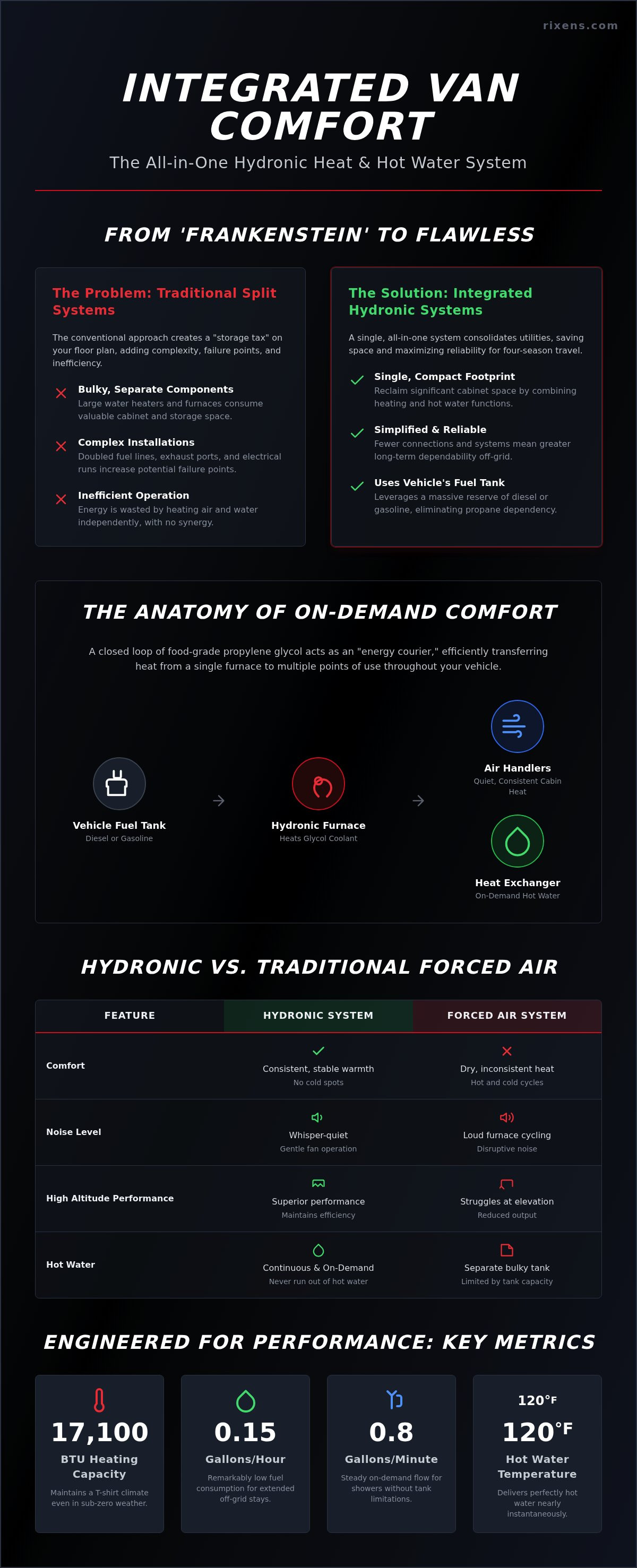
Choosing separate appliances for air and water creates what we call a "storage tax" on your floor plan. A traditional six-gallon water heater is a bulky, heavy cube that rarely fits well in a compact van interior. When you add a separate forced-air furnace to the mix, you're doubling your fuel lines, exhaust ports, and electrical connections. Every additional connection is a potential failure point. These split systems are also notoriously inefficient; they heat air or water independently, often wasting energy that could be shared across a single, unified loop. Transitioning to an integrated system simplifies your plumbing and electrical runs while reclaiming significant cabinet space for your gear.
Hydronic Efficiency: BTUs and Fuel Consumption
Efficiency in a mobile environment is measured by how much comfort you get for every drop of fuel. Most high-performance hydronic systems offer a heating capacity between 8,200 and 17,100 BTUs, which is more than enough to maintain a T-shirt climate in sub-zero weather. Hydronic heat transfer relies on the high thermal mass of a liquid medium to store and distribute energy more effectively than air alone, ensuring that temperatures remain stable even after the furnace cycles off. Because liquid retains heat longer than air, the system doesn't need to cycle as frequently. During standard operation, fuel consumption remains remarkably low, typically ranging from 0.15 to 0.17 gallons per hour. This allows you to stay warm for days on end without constantly watching your fuel gauge.
How Hydronic Systems Deliver Simultaneous Heat and Hot Water
The core of an all-in-one van heat and hot water system is a closed loop of food-grade propylene glycol. Think of this fluid as a specialized energy courier. It travels from the furnace to various points in the van, dropping off heat where it's needed most. Unlike traditional air heaters that just blow hot air, this system maintains a constant reservoir of thermal energy. When you need cabin heat, the glycol flows through air handlers; when you need a shower, it redirects that energy to a water heat exchanger.
This process relies on specialized components to convert liquid energy into usable comfort. Air handlers function like miniature radiators with quiet fans, gently warming the air without the scorched-dust smell of electric coils. When Choosing the Right Hydronic Heater, it's vital to look for hardware that manages these transitions seamlessly. High-quality systems ensure that even when the air handlers are running, you don't lose the ability to produce on-demand hot water. This dual-purpose functionality is what makes the system truly "all-in-one."
The Role of the Heat Exchanger
The "magic" of continuous hot water happens inside a plate heat exchanger. This compact device consists of several thin, stainless steel plates stacked together. The hot glycol flows on one side of the plates while your fresh water flows on the other. They never mix, but the heat transfer is nearly instantaneous. This design allows for a steady flow of water at 110-120°F at a rate of approximately 0.8 gallons per minute. Because the system is on-demand, you aren't limited by the capacity of a small storage tank. You can take a full shower without the "navy shower" routine of turning the water off to soap up. To keep this process efficient, we recommend a simple annual check of the glycol levels and pH balance to prevent internal corrosion.
Capturing Engine Waste Heat
One of the most significant advantages of a professional hydronic setup is the ability to recover engine waste heat. While you drive, your engine generates a massive amount of thermal energy that is usually dumped out of the radiator. By integrating your vehicle's cooling system with your hydronic loop, you can capture that "free" energy. This means that after a few hours of driving, your entire system is pre-heated. You'll arrive at your campsite with a warm interior and a system ready to provide hot water immediately, all without burning a single drop of fuel in your furnace. If you're looking for specialized components to build this type of loop, exploring professional hydronic heater kits is the best way to ensure your plumbing includes the necessary safety valves and isolation protocols.
Hydronic vs. Forced Air: Evaluating the All-in-One Advantage
The choice between hydronic and traditional forced-air heating often comes down to the quality of the living environment. Standard RV furnaces are known for their loud blowers and the "blast" of dry, dusty air that can make a small van feel like a desert. In contrast, an all-in-one van heat and hot water system uses quiet air handlers that gently circulate warmth. Because the heat is transferred via a liquid medium, the air doesn't lose its natural humidity, leading to a much more comfortable sleep and better respiratory health during long winter trips. This difference in air quality is one of the first things owners notice when upgrading from a basic air heater.
Longevity is another critical factor. While budget "knock-off" diesel heaters have become popular for their low entry price, they lack the integrated water heating capabilities of a true hydronic loop. These cheaper units are often built with lower-grade components that struggle with continuous use. Professional all-in-one van heat and hot water solutions are designed for years of service, utilizing robust furnaces and specialized plumbing that can withstand the vibrations of off-road travel. Choosing a professional system ensures you aren't stuck troubleshooting a failed heater in the middle of a blizzard.
The High Altitude Challenge
Oxygen levels drop significantly as you climb into the mountains, which can wreak havoc on standard combustion heaters. In a typical diesel furnace, the fuel-to-air ratio is fixed. At high altitudes, the air is too thin to burn the fuel completely, leading to "sooting" or carbon buildup that can choke the system and cause a permanent lockout. Professional systems, such as our Airtronic Heater Kits, are engineered with altitude sensors that automatically adjust the fuel pump frequency to match the available oxygen. This ensures a clean, efficient burn whether you are at sea level or camping at 10,000 feet. Preventing carbon buildup isn't just about performance; it's about ensuring your system remains reliable through every season of your journey.
Total Cost of Ownership Analysis
While the initial investment in a hydronic system is higher than a basic furnace, the long-term value is undeniable. A professional-grade system significantly increases the resale value of a van conversion, as experienced buyers prioritize reliable, four-season utilities. You also save on operational costs by drawing fuel directly from your vehicle's tank, which is more cost-effective and easier to manage than propane. In extreme cold, specifically temperatures reaching -20°F or lower, the reliability of a specialized hydronic loop becomes a safety necessity rather than a luxury. When you factor in the years of maintenance-free operation and the elimination of separate water heating hardware, the total cost of ownership often favors the integrated approach.
Designing Your System: Key Components and Space Considerations
Designing a professional-grade heating system requires more than just picking a furnace; it's an exercise in balancing thermal loads and spatial efficiency. Start your planning by calculating the BTU requirements for your specific van model. Most standard conversions require between 8,200 and 17,100 BTUs of heating capacity to maintain comfort in sub-zero conditions. If your van has extensive window area or minimal insulation, you'll want to aim for the higher end of that spectrum. An all-in-one van heat and hot water system allows you to meet these demands with a modular layout that fits into tight cabinets or under-floor storage areas.
Proper air handler placement is the next critical step. Instead of a single large vent, a hydronic loop allows you to place multiple small air handlers in strategic locations, such as the garage area to keep gear dry or near the sliding door to combat heat loss. Planning your plumbing and electrical harness runs early ensures that your glycol lines are protected from vibration and that your wiring remains accessible for future maintenance. If you are planning a complex multi-zone build, you can explore our MCS7 Controller Kit to see how it simplifies your electrical harness and system management.
The Brain of the System: MCS7 Controller
While many competitors rely on basic thermostats, the MCS7 Controller acts as the sophisticated brain of your entire environment. It provides precise temperature management and real-time system diagnostics, allowing you to monitor the health of your furnace and pumps at a glance. In the same way that schools utilize Rise to track performance and student activity through a unified dashboard, this controller provides the visibility needed to manage complex off-grid utilities. As of January 2024, firmware updates have further optimized how the controller manages fuel and battery consumption, ensuring that your system remains efficient during long off-grid stays. This digital interface also makes multi-zone management possible; you can keep your sleeping area cool while maintaining a higher temperature in the living space or "wet room" area.
Customizing Your Hot Water Experience
Beyond the basic heating loop, you can integrate luxury components like the Overland Shower to bring residential-style hygiene to the backcountry. To ensure safety, every system should include a high-quality mixing valve. This component blends hot water from the heat exchanger with cold water from your tank to deliver a consistent 110-120°F at the tap, preventing accidental scalds. We also recommend sizing your expansion tank based on the total volume of your glycol loop. This small tank absorbs the pressure changes that occur as the liquid heats and cools, protecting your fittings and ensuring the long-term reliability of your all-in-one van heat and hot water setup.
The MCS One Advantage: Rixen's Enterprises, Inc. and Integrated Comfort
The culmination of specialized engineering is found in the MCS One Hydronic System. This compact unit is specifically designed to meet the rigorous demands of the modern van footprint, where every square inch of storage is precious. By integrating the furnace, heat exchanger, and pumps into a single enclosure, we provide a streamlined solution for all-in-one van heat and hot water. This approach eliminates the component sprawl often found in DIY builds, ensuring that your system is not only easier to install but also simpler to maintain over thousands of miles of travel.
Since 1985, Rixen's Enterprises, Inc. has focused on the specialized needs of mobile environments. We understand that a heating system is a long-term investment in your vehicle's utility and your personal comfort. Our heritage as an industry leader allows us to offer more than just hardware; we provide the peace of mind that comes from proven results and specialized knowledge. Choosing professional-grade hardware means you are opting for a system designed to outlast the van itself, backed by a team that prioritizes enduring partnerships over simple transactions.
Engineered for Reliability
The foundation of our systems lies in the quality of our Airtronic Heater Kits and Eberspacher-based components. These furnaces are the gold standard for high-performance heat, trusted in marine and rugged overland environments where equipment failure is not an option. Whether you are facing salt spray on the coast or the fine dust of the desert, our hardware is built to maintain peak efficiency. Rixen's Enterprises, Inc. remains deeply committed to accountability and the development of enduring partnerships with every traveler we serve. This durability ensures that your all-in-one van heat and hot water setup remains a dependable partner through every season and every altitude change.
Getting Started with Your Custom Build
Every van build is unique, and we believe your heating solution should reflect your specific adventure style. Our consultative design process helps match the right hardware, from specialized air handlers to the MCS7 Controller, to your vehicle's insulation and layout. We don't just sell kits; we help you design a modular hydronic loop that captures every BTU of energy available. This methodical approach reduces the stress of complex technical decisions, allowing you to focus on the journey ahead. If you are ready to move away from cold spots and inconsistent water temperatures, we invite you to contact Rixen's Enterprises, Inc. for a system consultation to discuss the specific requirements of your project.
Secure Your Comfort for Every Season
Choosing the right heating solution is about more than just surviving a cold night; it's about building a vehicle that supports your lifestyle for years to come. By moving toward an all-in-one van heat and hot water system, you eliminate the clutter of multiple fuel sources and bulky appliances. This integrated approach ensures that you have the same level of comfort at 10,000 feet as you do at sea level, backed by hardware specifically designed for high-altitude and extreme cold performance.
With over 40 years of hydronic expertise, we've refined our systems to be as dependable as they are efficient. Our proprietary MCS7 digital control technology provides the precise management needed to maintain your cabin and water temperatures with ease. We believe in providing more than just parts; we offer a partnership rooted in accountability and technical excellence. When you're ready to invest in long-term reliability and peace of mind, we're here to guide you through every step of the process.
Explore the MCS One All-in-One Hydronic System today and start planning your ultimate four-season build. We look forward to helping you create a cabin environment that feels like home, no matter where the road leads.
Frequently Asked Questions
Can I use a hydronic system to heat my van floor?
Yes, hydronic systems are the ideal choice for integrating radiant floor heating into a mobile environment. By adding a dedicated PEX tubing loop beneath your subfloor, you can circulate warm glycol to create a consistent heat that rises from the ground up. This setup is often used alongside air handlers to provide the most comfortable and efficient four-season environment possible.
How much electricity does an all-in-one van heater consume?
Electrical consumption is remarkably low, typically ranging from 1 to 4 amps depending on the fan speed of your air handlers. The furnace itself uses a small amount of power for the fuel pump and glow plug during the initial start-up phase. This minimal draw makes an all-in-one van heat and hot water system a sustainable choice for travelers relying on solar power and lithium battery banks.
For those who value this level of resource efficiency, Garden Watering provides similar automated solutions for the home, ensuring your plants stay hydrated without wasting water while you are out exploring.
Does the MCS One system work with both diesel and gasoline engines?
Yes, the MCS One system is available in specific configurations for both diesel and gasoline fuel types. We utilize specialized furnaces that tap directly into your vehicle's existing fuel tank, which removes the need for a secondary propane source. It's important to select the model that matches your van's engine to ensure long-term compatibility and safety during your travels.
How long does it take to get hot water with a hydronic system?
You can expect continuous hot water almost instantly once the glycol loop has reached its operating temperature. If the system is starting from a completely cold state, it usually takes 10 to 20 minutes for the furnace to heat the internal reservoir. Once the loop is hot, the plate heat exchanger provides a steady flow of water for as long as you need it.
Can I install a Rixen's Enterprises, Inc. hydronic system myself or do I need a professional?
While many skilled DIY builders successfully install our hardware, we generally recommend professional installation due to the complexity of fuel, electrical, and plumbing integration. The team at Rixen's Enterprises, Inc. provides comprehensive technical guidance for those who choose to take on the project themselves. A professional installation ensures that your system meets the latest safety standards and operates at peak performance for years to come.
What maintenance does a van hydronic system require?
Maintenance is straightforward and primarily involves an annual check of the glycol levels and its pH balance. It's also a good practice to inspect the fuel lines and exhaust for any signs of wear or vibration damage from off-road travel. Keeping the combustion chamber clean ensures the furnace remains reliable, especially if you frequently travel in dusty environments or at varying altitudes.
Will a hydronic heater work at high altitudes in the mountains?
Yes, our specialized Airtronic heater kits include automatic altitude adjustment to ensure reliable operation in mountain environments. These systems use sensors to modify the fuel-to-air ratio, preventing the carbon buildup that often causes standard heaters to fail at high elevations. This feature allows you to maintain a comfortable cabin even when camping at 10,000 feet or higher.
How much space does the MCS One system actually take up?
The MCS One is engineered for a compact footprint, allowing it to fit into small cabinets or under-seat compartments that traditional water heaters cannot occupy. By consolidating the furnace and heat exchanger into one enclosure, you save significant storage space for other gear. This efficient design is a primary reason why an all-in-one van heat and hot water solution is preferred for high-end conversions.
