
Your ambulance was engineered to save lives in the harshest conditions, but that heavy-duty aluminum shell is a thermal nightmare for anyone trying to sleep through a winter night. While many builders try to get by with basic forced-air units, a specialized ambulance conversion heating system is the only way to match the professional durability of your vehicle. You've likely already discovered that these "boxes" are prone to stubborn cold spots and noisy fans that make it hard to feel truly at home.
We believe your mobile sanctuary should offer the same silent, consistent comfort as a high-end residential property. This guide will show you how to utilize professional hydronic loops to create a true four-season sanctuary. You'll learn how to integrate systems like the MCS One to provide both radiant heat and on-demand hot water while utilizing your engine's warmth on the road. We will break down the technical details of hardware selection and electrical integration, giving you the confidence to build a system that stays reliable for the long haul.
Key Takeaways
- Understand why the unique aluminum framing of an ambulance "box" requires a specialized hydronic strategy to eliminate stubborn cold spots.
- Learn how to select a professional ambulance conversion heating system that provides silent, residential-quality warmth and on-demand hot water.
- Compare the efficiency of liquid-to-air heat exchangers against forced-air units to see how hydronic systems prevent condensation and improve air quality.
- Discover how to utilize exterior "coffin" compartments and engine heat recovery to maximize interior living space and off-grid energy efficiency.
- Explore the benefits of all-in-one solutions like the MCS One for simplifying complex plumbing and electrical integrations in your build.
Why Ambulance Conversions Require a Specialized Heating Strategy
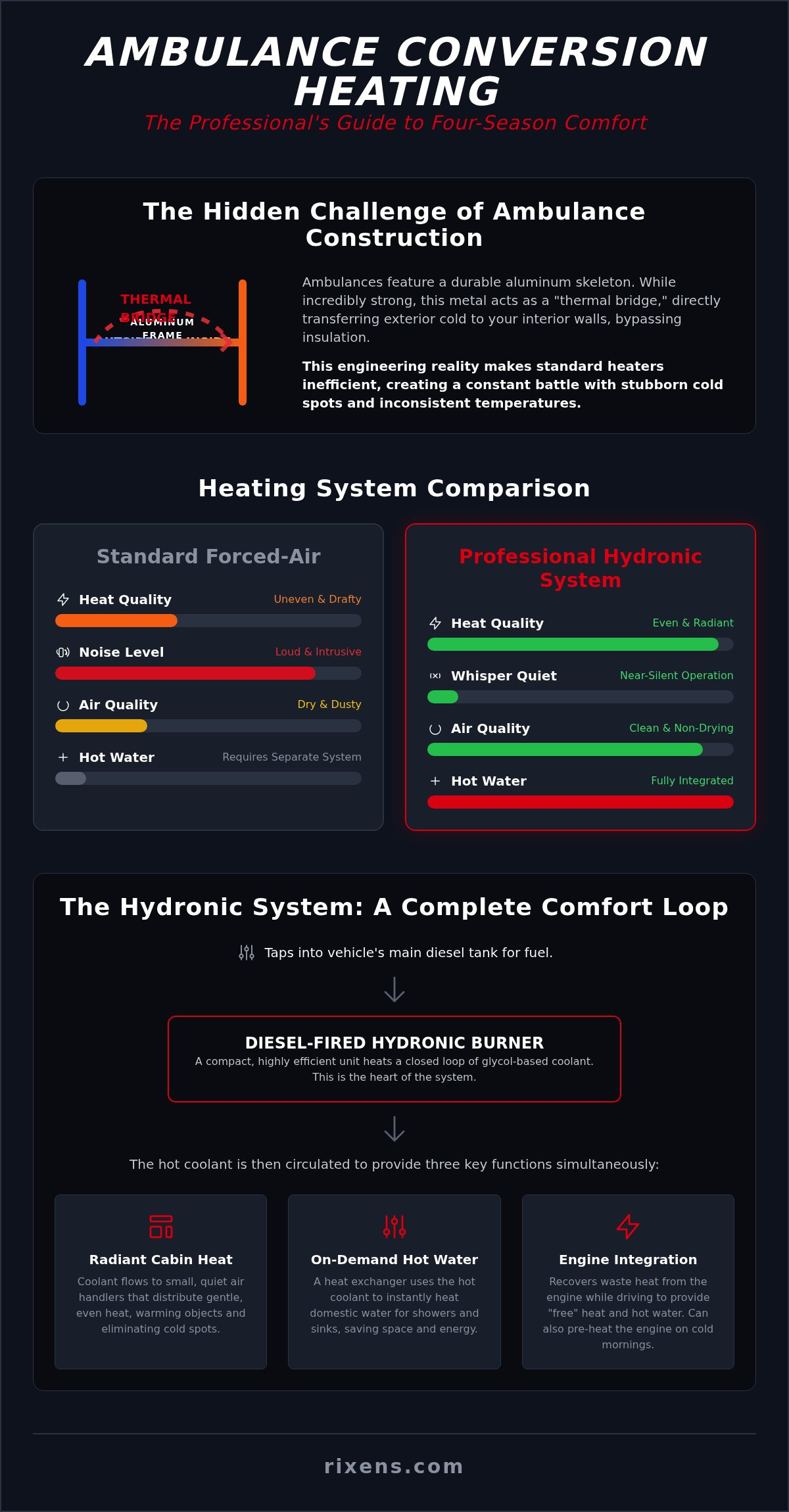
Ambulance conversions offer a unique level of structural integrity, but they present a specific set of thermal challenges that a standard cargo van doesn't face. Most ambulances are built with a heavy-duty aluminum skeleton. While this provides incredible safety and durability, aluminum is a highly efficient conductor of heat and cold. This means that even with premium insulation between the ribs, the frame itself acts as a highway for the outside temperature to enter your living space. Choosing a dedicated ambulance conversion heating system isn't just about adding warmth; it's about overcoming the inherent engineering of the vehicle to create a stable, residential environment.
Understanding Thermal Bridging in Ambulance Boxes
Aluminum studs transfer cold directly from the exterior skin to your interior walls, a process known as thermal bridging. If you rely solely on forced air heaters, you'll often experience "hot heads and cold feet" because the air doesn't distribute evenly across these cold surfaces. The air gets hot quickly, but the walls remain freezing. Radiant heat, delivered through a liquid medium, helps stabilize the cabin temperature by warming the objects and surfaces within the box. This creates a much more consistent climate that doesn't disappear the moment a fan stops blowing. It's the difference between a drafty tent and a solid home.
The Three Pillars of Ambulance Climate Control
A professional-grade system should handle more than just the air temperature. We focus on an integrated approach that utilizes Hydronics to manage three critical areas of mobile life. First, you need reliable cabin warmth that can handle sub-zero nights without the constant roar of a fan. Second, you require consistent, on-demand domestic hot water for showers and sinks, which is often a struggle in compact builds. Finally, a smart system integrates with your vehicle's coolant loop. This allows you to use waste heat from the engine to warm your living space while driving and, conversely, use the heater to pre-warm your engine on freezing mornings.
In 2026, the standard for ambulance builds has shifted from "survival heating" to true "comfort climate control." Modern owners expect their rigs to feel like a professional sanctuary. By moving away from noisy, dry forced-air units and toward a silent, liquid-based ambulance conversion heating system, you're investing in the long-term livability of your build. It's about the confidence that comes from expert guidance and hardware that's built to last as long as the vehicle itself.
How Hydronic Systems Work: The Science of Liquid-to-Air Heat
A hydronic ambulance conversion heating system operates on a fundamentally different principle than the forced-air units found in entry-level builds. Instead of blowing air over a combustion chamber, these systems use a closed-loop network to circulate a glycol-based coolant. This liquid acts as a highly efficient energy carrier, moving heat from a central burner to small, quiet air handlers located throughout the cabin. Because the system is sealed, it doesn't dry out the air or circulate dust and allergens, which is a common complaint with traditional diesel air heaters.
Diesel-fired hydronic burners have become the gold standard for 2026 conversions because they tap directly into the vehicle's existing fuel tank. This eliminates the need for secondary fuel sources and provides massive heat output in a compact footprint. These systems are designed to meet rigorous safety standards, including those outlined in NFPA 1917, ensuring your build remains as professional as the day it left the factory. The result is a heating solution that feels residential rather than industrial.
The Engine Heat Exchange Loop
One of the greatest advantages of this technology is its ability to capture "free" energy. Waste heat recovery is the process of diverting engine coolant through a plate heat exchanger. This allows you to arrive at your campsite with a fully heated cabin and a tank of hot water without burning a drop of extra fuel while driving. On the coldest mornings, the loop works in reverse. You can use your heater to pre-warm the engine block, which reduces wear and ensures a smooth start in sub-zero temperatures.
Domestic Hot Water Integration
Traditional RVs often rely on bulky six-gallon tanks that take up valuable cabinet space and run out of hot water mid-shower. The MCS One Hydronic System solves this by integrating a domestic hot water loop directly into the heating circuit. It provides continuous, on-demand hot water for your sink and shower, allowing for a residential-quality experience in an off-grid environment. By combining these functions, you can completely eliminate the need for a separate propane system, simplifying your build and increasing safety. If you're ready to plan your layout, exploring the MCS One Hydronic System is a great first step toward a simplified, all-in-one climate solution.
Hydronic vs. Forced Air: Which is Best for Your Ambo?
Choosing the right ambulance conversion heating system often comes down to a choice between immediate cost and long-term livability. While forced air diesel heaters are a common entry point due to their lower initial price, they bring significant compromises to a heavy-duty build. Forced air units operate like a jet engine, utilizing high-velocity fans that cycle on and off throughout the night. This creates a disruptive noise floor and rapid temperature swings. In contrast, hydronic systems offer a level of silence and stability that mirrors a high-end residential environment, making them the preferred choice for those planning to live in their vehicle full-time.
Air quality and moisture management are where the differences become most apparent. Forced air systems move large volumes of dry air, which can circulate dust and allergens while drying out your sinuses during winter months. Because the "Ambo Box" is prone to condensation on its aluminum frame, the rapid heating and cooling of forced air can actually exacerbate moisture issues. Hydronic systems provide a steady thermal mass. By keeping surfaces consistently warm, they help prevent the damp, "clammy" feeling that often plagues smaller mobile builds. One professional hydronic unit also replaces the need for separate water heaters and propane tanks, saving significant interior space.
The Comfort Factor: Radiant vs. Convection
Hydronic heat feels more like a home and less like a hair dryer. Instead of blowing hot air directly at you, the system uses small air handlers to distribute warmth evenly. This allows for sophisticated zoning. You can keep your sleeping area at a cool 60 degrees while ensuring the bathroom and main living area stay a toasty 72. This level of control is impossible with a single-source forced air heater. By warming the objects in the room rather than just the air, the heat stays "low" where you actually live, rather than pooling at the ceiling.
Installation Complexity vs. Long-Term Value
There is a common myth that hydronic systems are too complex for a DIY builder. Modern kits, such as the MCS One Hydronic System, have simplified the plumbing and electrical integration significantly. While the initial setup requires more planning than a basic air heater, the return on investment is substantial. A premium ambulance conversion heating system significantly increases the resale value of your rig. More importantly, it offers peace of mind. We've seen many owners replace cheap air heaters every two years, whereas a professional hydronic loop is designed to last for decades. When you're off-grid in sub-zero temperatures, that reliability is the only thing that matters.
Planning Your Ambulance Heating Layout and Installation
Setting up an ambulance conversion heating system follows a logical sequence that begins with hardware placement and ends with technical integration. You aren't fighting for every square inch under a swivel seat like you would in a traditional van. Instead, you can take advantage of the vehicle's original engineering. Most ambulances feature exterior "coffin" compartments. These heavy-duty, weather-sealed lockers are the perfect location for your main burner and the MCS One Hydronic System. By housing the hardware externally, you eliminate combustion noise inside the cabin and simplify the routing of exhaust and fuel lines, keeping the interior environment peaceful and clean.
Tapping into the Ambulance Fuel System
Integrating your heater with the vehicle's existing diesel tank is safer and more efficient than carrying auxiliary fuel containers. We recommend installing a dedicated standpipe directly into the fuel sender unit. This ensures the heater has a consistent fuel supply without interfering with the engine's primary lines. For those traveling in high-altitude regions, proper fuel pump placement is critical. Mounting the pump close to the tank and at the correct angle prevents vapor lock. This methodical approach ensures the burner receives a steady flow even in thin air, providing reliable heat when you're parked at high elevations.
Placement of Air Handlers for Optimal Flow
The unique cabinetry in an ambulance provides excellent opportunities for hidden ducting. However, you must account for the "cold floor" effect caused by the aluminum frame. Strategic placement of air handlers at floor level helps create a thermal curtain that rises, warming the cabin more effectively than ceiling-mounted vents. It's also vital to ensure clear return air flow. If an air handler is tucked too tightly into a cabinet without a return grill, the system won't circulate air properly. This can lead to inconsistent thermostat readings and short-cycling, which puts unnecessary wear on your components.
Plumbing the glycol lines requires careful routing to minimize heat loss. Use high-quality insulated hoses and avoid sharp 90-degree bends that can restrict flow. On the electrical side, the MCS7 Controller Kit acts as the brain of your climate system. It manages the burner, circulating pumps, and fan speeds to maintain your desired temperature with precision. This integration reduces the stress of complex technical decisions, allowing you to focus on the journey ahead. If you're ready to design your layout, we can help you select the right Hydronic Heater Kits to match your specific ambulance floor plan.
The Rixen's Advantage: Professional Grade Ambo Solutions
Designing an ambulance conversion heating system requires more than just high-quality hardware; it requires a specialized understanding of mobile engineering. Since 1985, we've focused on providing consultative support to ensure every build achieves residential-level comfort. We don't just ship kits. Our team works with you to design a specific loop that accounts for your vehicle's unique layout and insulation needs. This commitment to long-term reliability means you have a partner who is accountable for the performance of your system throughout its entire lifecycle.
Spotlight on the MCS One Hydronic System
The MCS One is our premier all-in-one solution, specifically engineered to combine cabin air heating, domestic hot water, and engine heat recovery into a single footprint. Its compact design is a natural fit for the exterior utility bays often found in ambulance boxes, freeing up valuable interior living space. Because the system operates with near-silent efficiency, it's ideal for stealth camping or peaceful nights in remote wilderness areas. For those looking to add a touch of luxury, the MCS One integrates seamlessly with our Overland Shower, providing the high-flow hot water you need for a truly refreshing off-grid experience. It's a professional-grade solution for a ambulance conversion heating system that demands durability.
The Power of the MCS7 Controller
Precision control is what separates a professional build from a basic conversion. The MCS7 Controller Kit serves as the digital brain of your environment, allowing you to manage multiple heating zones with a single interface. While competitors often offer simple on-off switches, our controller provides sophisticated diagnostics and automatic altitude adjustment. This ensures your burner operates efficiently whether you're at sea level or crossing a mountain pass over 10,000 feet. You can learn more about optimizing your hydronic control software to see how this precision translates to fuel savings and consistent comfort.
Our approach is rooted in nearly 40 years of specialized hydronic experience. We understand that a technical build can be stressful, which is why we prioritize clear communication and thorough documentation. When you choose a system from Rixen's Enterprises, Inc., you're investing in a heritage of proven results and a steady, dependable partner. We're here to help you turn a rugged ambulance shell into a dependable, four-season sanctuary that you can rely on for decades.
Building Your Four-Season Sanctuary
The transition from a rugged ambulance shell to a truly livable home depends on a climate strategy that matches the vehicle's heavy-duty engineering. You've seen how a liquid-based ambulance conversion heating system overcomes the thermal bridging of aluminum frames to provide silent, residential-quality warmth. By integrating air heating, domestic hot water, and engine heat recovery into a single loop, you maximize your interior space while ensuring consistent comfort. These systems are engineered for extreme off-grid durability, giving you the peace of mind to explore remote landscapes regardless of the temperature outside.
Since 1985, we've served as industry leaders by providing specialized tech support for every kit sold. We're dedicated to helping you navigate technical decisions with confidence, ensuring your hardware is perfectly matched to your specific build. Design your custom ambulance heating system with Rixen's expert guidance and take the first step toward a more reliable mobile lifestyle. Your four-season sanctuary is within reach, and we're ready to help you build it.
Frequently Asked Questions
Can I use the ambulance's original rear HVAC system for my conversion?
You can technically use the factory rear HVAC, but it isn't practical for off-grid living because it requires the vehicle's engine to be running. Most original units are tied to the engine's coolant loop and AC compressor. Switching to a dedicated ambulance conversion heating system allows you to maintain a comfortable climate while the engine is off, preserving fuel and reducing unnecessary mechanical wear on your primary vehicle. For those who need to address existing mechanical issues or heavy equipment maintenance on their rig, Ms. Hydraulics LLC offers professional mobile repair services to ensure your base vehicle is as reliable as your new heating system.
How much diesel does a hydronic heater use per night?
A typical hydronic heater is incredibly efficient, consuming between 0.1 and 0.5 liters of diesel per hour depending on the heat load. Over an eight-hour night, you might only use about a quart to a gallon of fuel. This efficiency makes it an ideal solution for long-term off-grid travel. You won't have to worry about depleting your main fuel tank even during extended stays in sub-zero environments.
Is hydronic heating safe for indoor use in a small ambulance space?
Hydronic heating is exceptionally safe for small, enclosed spaces because the combustion process happens in a sealed chamber outside the cabin. All exhaust gases are vented directly to the exterior of the vehicle. Unlike portable propane heaters, there's no risk of carbon monoxide buildup or moisture accumulation inside your living area. This design provides peace of mind for travelers who prioritize safety and air quality.
Do I need a separate hot water tank if I install an MCS One system?
You don't need a bulky storage tank when using the MCS One Hydronic System. This all-in-one unit utilizes a high-efficiency plate heat exchanger to provide continuous, on-demand hot water. This design saves significant cabinet space in your build and eliminates the wait time associated with traditional six-gallon RV heaters. You'll enjoy a residential-quality shower experience without the weight and complexity of a separate water heater.
What happens if the glycol loop leaks inside my ambulance conversion?
While a leak is rare with professional-grade fittings, it would result in a localized spill of non-toxic propylene glycol. We recommend using food-grade glycol to ensure safety if a leak occurs near your water lines. If you notice a drop in the expansion tank level, check your hose clamps and connections immediately. Proper routing and the use of high-quality constant-tension clamps during installation significantly reduce the risk of any internal leaks.
Can I install a hydronic heating system myself, or do I need a professional?
Many DIY builders successfully install our ambulance conversion heating system kits using our detailed documentation and specialized tech support. If you're comfortable with basic plumbing and 12V electrical wiring, you can handle the installation. We always offer a consultative approach to help you plan your loop. If you feel overwhelmed by the technical integration, a professional upfitter can ensure your system is optimized for peak performance.
How does high altitude affect the performance of an Airtronic heater kit?
Modern Airtronic Heater Kits feature integrated sensors that automatically adjust the fuel-to-air ratio for high-altitude operation. Without this adjustment, heaters can "soot up" in thin air, leading to maintenance issues. Our systems are designed to operate reliably at elevations up to 10,000 feet and beyond. This automatic compensation ensures that your burner remains clean and efficient whether you're parked at sea level or high in the mountains.
Can I integrate hydronic floor heating with an MCS One system?
You can absolutely integrate radiant floor heating into your MCS One loop. By adding a mixing valve and a dedicated floor loop, you can maintain a warm floor surface while the air handlers manage the cabin temperature. This setup is particularly effective in ambulances to combat the "cold floor" effect of the aluminum frame. It adds a layer of luxury and thermal stability that makes winter living much more enjoyable.
