
Imagine waking up at 10,000 feet at high elevations only to find a "heater fail" code on your screen and a cabin that has already dropped to 40 degrees. You've spent months perfecting your build; the last thing you want is a setup that can't handle the altitude or leaves you with freezing floors. Finding the right heating systems for sprinter vans often feels like a stressful trade-off between saving limited cabinet space and staying warm. You deserve a system that works every time you turn the key, regardless of how thin the air gets or how low the mercury dips.
We understand that technical decisions like these carry a lot of weight, especially when you're miles from the nearest paved road. This 2026 guide is designed to give you total peace of mind by exploring the most reliable air and hydronic solutions available today. You'll learn how to transform your van into a true four-season vehicle with on-demand hot water and even heat distribution. We'll examine the latest technology, including the MCS One Hydronic System and high-altitude furnaces like the S3 Hydronic D5E, to ensure your next adventure is defined by comfort rather than cold.
Key Takeaways
- Decide between the simplicity of Airtronic forced air systems or the all-in-one efficiency of MCS One hydronic kits for both cabin and water heating.
- Learn how to correctly size your furnace BTU output based on your Sprinter’s wheelbase to avoid inconsistent temperatures and fuel waste.
- Discover the technical advantages of high-altitude optimized furnaces like the S3 Hydronic D5E for reliable performance in thin mountain air.
- Explore how to achieve "set and forget" comfort by integrating heated floor kits and the proprietary MCS7 Controller into your build.
- Understand the professional requirements for safely integrating heating systems for sprinter vans with the vehicle’s factory auxiliary fuel port.
Understanding Heating Systems for Sprinter Vans: Air vs. Hydronic
Selecting the right climate control setup is one of the most critical decisions in a van build. Most owners eventually find themselves choosing between two distinct technologies: forced air and liquid-based hydronic systems. Both options are designed to tap directly into your vehicle's diesel or gasoline tank using the factory auxiliary fuel port. This integration is a game changer for long-term travel because it eliminates the need to carry heavy propane tanks or worry about finding refill stations in remote areas. When evaluating heating systems for sprinter vans, the choice usually comes down to your specific travel style and how much you value integrated amenities like on-demand hot water.
Airtronic Air Heaters: Fast, Dry Heat
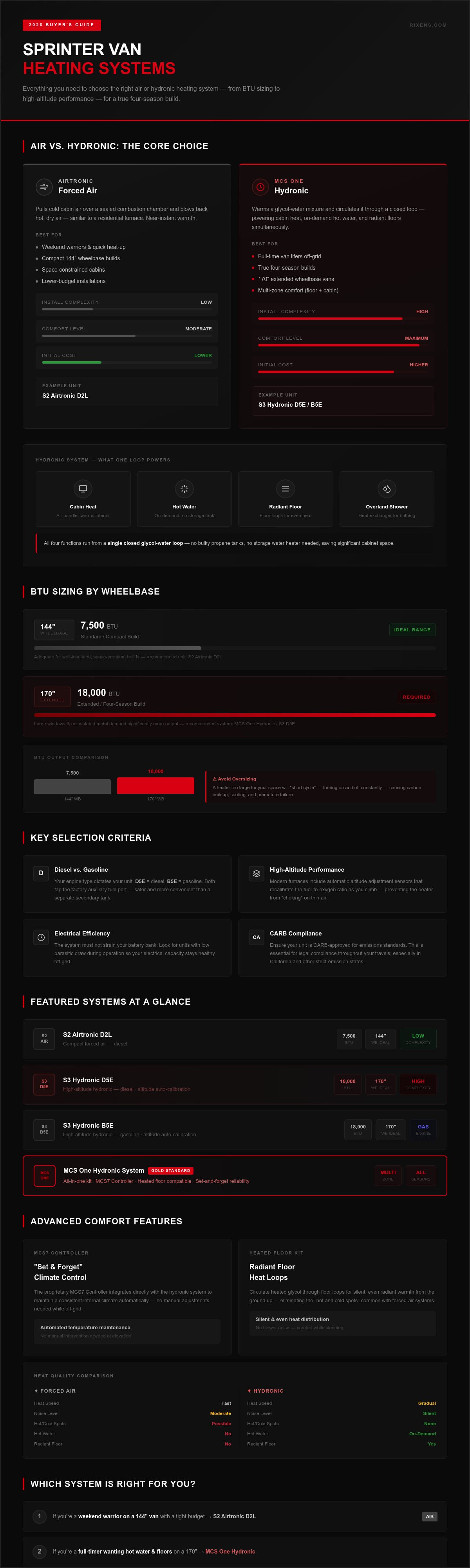
Air heaters are the most common entry point for van conversions. These units, such as the S2 Airtronic D2L, function similarly to a hair dryer or a residential furnace. They pull in cold cabin air, pass it over a sealed combustion chamber, and blow it back out as hot, dry air. This process provides almost instant warmth, which is ideal for "weekend warriors" who need to heat a cold van quickly after a day of hiking. Because these kits are compact and require fewer components than liquid-based systems, they are generally easier to install and carry a lower initial cost. They're a solid, dependable choice for smaller 144" wheelbase builds where space is at an absolute premium and the primary goal is simply keeping the cabin air comfortable.
Hydronic Systems: The Luxury of Integrated Comfort
For full-timers and those building a true four-season vehicle, the MCS One Hydronic System represents the gold standard of comfort. Instead of just heating air, these systems warm a glycol-water mixture and circulate it through a closed loop. This heated fluid can then be used for multiple purposes simultaneously. It can run through an air handler to warm the cabin, pass through a heat exchanger for an Overland Shower, or even circulate through floor loops for radiant heat.
The primary benefit of a hydronic setup is the quality of the heat. It's a silent, steady warmth that doesn't create the "hot and cold spots" often associated with forced air. Because the system can provide continuous on-demand hot water without a bulky storage tank, you save a significant amount of interior cabinet space. While the technical installation is more complex, the "set and forget" reliability of a well-designed hydronic loop provides a level of peace of mind that is hard to beat when you're living off-grid for weeks at a time.
Key Criteria for Choosing Your Sprinter Van Heater
Selecting the right hardware for your build requires looking beyond simple temperature control. You need to consider how your furnace interacts with your fuel supply, your electrical capacity, and the specific volume of your living space. When evaluating heating systems for sprinter vans, the goal is to find a balance where the unit runs efficiently without straining your batteries or causing long-term mechanical issues. We focus on ensuring every component works in harmony with your vehicle's existing architecture to provide a seamless, high-performance experience.
Diesel vs. Gasoline Furnaces
Your Sprinter’s engine type dictates your furnace choice. We provide specialized units like the S3 Hydronic D5E for diesel engines and the S3 Hydronic B5E for gasoline models to ensure perfect compatibility. Tapping directly into the vehicle's fuel tank is significantly safer and more convenient than installing a separate, secondary tank. It ensures you have a massive fuel reserve for long stays without the risk of spills or fumes inside the cabin. Reliability is also a matter of regulation; ensuring your unit is CARB-approved is essential for meeting emission standards and maintaining legal compliance throughout your travels.
Calculating Your BTU Needs
Sizing is where many builders make mistakes. While a 7,500 BTU unit might keep a well-insulated 144" wheelbase van cozy, a 170" Extended model often requires up to 18,000 BTU to combat heat loss through large windows and uninsulated metal. However, bigger isn't always better. If you install a heater that is too powerful for your space, it will "short cycle," turning on and off constantly. This leads to carbon buildup and "sooting," which can cause the system to fail prematurely. You want a unit that runs for longer periods at a steady, efficient rate to maintain a consistent internal climate.
High-altitude performance is another non-negotiable factor for mountain adventurers. Modern furnaces now include automatic altitude adjustment sensors that recalibrate the fuel-to-oxygen ratio as you climb. This prevents the heater from "choking" on thin air and ensures it remains operational at 10,000 feet and beyond. Additionally, you should calculate your battery draw; while these systems are fuel-efficient, they still require 12V power for the pumps and air handlers. If you're unsure which setup fits your specific electrical layout, you can explore our specialized Sprinter kits to find a balanced solution for your build.
Top-Rated Heating Solutions for Sprinter Builds
Selecting the right hardware is about matching technical specifications to your real-world travel goals. In our 40 years of experience, we've seen how the right setup can turn a frigid night into a restful sleep. The following heating systems for sprinter vans represent the peak of reliability and efficiency for modern van life, whether you're building a minimalist weekend rig or a full-time adventure home.
The Airtronic Series: S2 vs. 1st Generation
The S2 Airtronic D2L ($1367.10) represents a significant leap forward from older technology. One of the most common complaints with 1st Gen heaters was the audible "clicking" of the fuel pump and the wear on internal components over time. The S2 solves these issues with a silent fuel pump and brushless motors that dramatically extend the unit's service life. Its stepless heating power means the furnace doesn't just cycle between high and low; it adjusts precisely to maintain your desired temperature without constant restarts. For those traveling in consistently sub-zero environments, the Airtronic M2-D4-L is the high-output choice for cold climates, providing the extra BTU capacity needed when the thermometer drops below freezing for extended periods.
The Hydronic Series: S3 and MCS Kits
If you want a fully integrated experience, the MCS6 Hydronic with S-3 Gasoline Furnace Kit ($5272.25) is a premier choice for gasoline-powered Sprinters. This kit doesn't just warm the air; it manages your entire thermal environment. A key feature is the integrated mixing valve, which blends hot and cold water to ensure your shower temperature remains constant. This prevents the "scald or freeze" cycle common in less sophisticated systems. The S3 furnace utilizes multiple heat stages to adjust fuel consumption based on your actual needs, making it incredibly efficient for long-term off-grid use. It's a "set and forget" solution that provides peace of mind through every season.
Specialty Add-ons for the Ultimate Build
Beyond the primary furnace, we offer specialized upgrades that provide residential-level comfort in a mobile footprint. Our heated floor kits are designed specifically for the Sprinter's floor plan, eliminating the cold spots that often plague van interiors during winter. When you pair these with our Overland Shower, you gain a reliable way to stay clean and warm without ever relying on campground facilities. These components are designed to work together under the management of our MCS7 Controller, ensuring that your technical install remains streamlined and supported by our team throughout the life of your vehicle. To complement your climate control, choosing the right kitchen appliances is the next step in creating a premium living space; you might learn more about Island Catering Equipment Co. for inspiration on professional-grade equipment that brings home-like comfort to your van's galley.
Advanced Comfort: Heated Floors and Controls
While forced air provides quick warmth, true comfort in a mobile environment is about more than just the air temperature. It's about the temperature of the surfaces you touch. Integrating hydronic radiant heat into your floor plan is the ultimate "set and forget" upgrade for any serious build. It eliminates the shock of a cold floor on a winter morning and creates a thermal mass that holds heat far more effectively than air alone. When considering heating systems for sprinter vans, adding floor loops significantly reduces the load on your air handlers. This leads to a much quieter cabin and less mechanical wear on your blower motors over the life of the system.
Sprinter-Specific Heated Floor Kits
We've developed custom-fit designs specifically for the Mercedes Sprinter 144" WB and 170" WB chassis to ensure a perfect layout every time. Our Mercedes Sprinter 144" WB Heated Floor (Gen 2) kits are engineered to sit within the subfloor, integrating directly into your main hydronic circuit. Many DIY builders attempt to use electric heating mats, but these can rapidly deplete even a large battery bank in sub-zero weather. Hydronic loops are vastly more efficient because they use the thermal energy already being produced by your furnace. This radiant approach allows you to keep your thermostat set several degrees lower while feeling warmer, as the heat rises evenly from the ground up rather than pooling at the ceiling.
Precision Control with the MCS7
Managing a complex system that handles air, water, and floor heat requires a sophisticated brain. The MCS7 Controller Kit moves your build beyond simple analog dials and into the realm of professional digital climate management. This proprietary controller acts as the central hub for what we call "4D heating," coordinating your furnace, air handlers, and floor loops with precision. It's designed to be intuitive, yet it provides deep technical functionality for those who want to monitor every aspect of their environment.
The MCS7 includes built-in troubleshooting diagnostics and high-accuracy temperature sensors, ensuring you have total visibility into your system's performance. If an issue arises at a high-altitude campsite, the controller helps you identify the cause quickly so you aren't left in the cold. This level of control reduces the stress of technical management, allowing you to focus on the journey rather than the hardware. If you're ready to spec out your build, you can browse all Sprinter-class heating components here to see how these parts fit together into a cohesive, reliable system.
Installation and Maintenance: Ensuring Long-Term Reliability
Installing heating systems for sprinter vans is a precise undertaking that requires a methodical approach. While some guides suggest you can finish a full hydronic setup in a single weekend, we recommend a more deliberate pace to ensure every connection is secure. A successful build begins with a clear layout plan. You'll need to decide where to mount the furnace, typically under the passenger seat or externally beneath the chassis, and where to place your air handlers to ensure optimal airflow. Placing the expansion tank at the highest point of the coolant loop is also essential to prevent air from being trapped in the lines.
Integrating with your Sprinter’s fuel system is the next critical phase. Mercedes-Benz provides an auxiliary fuel port, often referred to as the KL1 tap, which allows your heater to draw diesel or gasoline directly from the main tank. This prevents the need for secondary fuel containers, but it requires careful routing to avoid heat sources or moving parts. Once the fuel lines are set, you'll move on to the coolant plumbing and electrical wiring. Connecting the MCS7 Controller Kit is the final step, acting as the brain that coordinates your air handlers, floor loops, and furnace ignition.
Common Installation Mistakes to Avoid
Safety is our primary concern, and most issues we see stem from improper exhaust routing. If the exhaust pipe is too close to the air intake, the furnace can "inhale" its own fumes, leading to poor combustion and carbon buildup. Another frequent hurdle is the presence of airlocks in the coolant loop. If the system isn't bled properly during the initial fill, the glycol won't circulate, and the heater will quickly shut down to prevent overheating. We also advise against using oversized fuel lines; at high altitudes, the specific diameter of the line is vital for maintaining the correct fuel pressure. Using the exact components provided in our hydronic heater kits helps you avoid these technical pitfalls from the start.
Routine Maintenance for 4-Season Performance
The best way to ensure your system starts on the first cold night of the year is to "exercise" it once a month, even during the summer. Running the furnace for 15 to 20 minutes prevents fuel from gelling in the lines and keeps the internal components lubricated. It's also a good practice to inspect your hydronic loop for any signs of leaks and to verify that your glycol levels remain within the recommended range.
Periodic cleaning of the glow pin and fuel screen is the most effective way to maintain reliable ignition. Over time, carbon can accumulate on these parts, especially if the heater is frequently run on low power. By performing these simple checks, you protect your investment and ensure that your Sprinter remains a comfortable, dependable sanctuary regardless of the weather outside. Our team is always available to provide consultative support if you encounter a technical challenge during your maintenance routine.
Building Your Four-Season Sanctuary
Designing a reliable climate control system is the foundation of any successful van build. By now, you understand how to balance fuel types, BTU requirements, and the technical advantages of hydronic integration. Whether you choose the rapid warmth of an Airtronic unit or the "set and forget" luxury of an MCS One system with heated floors, your goal is consistent comfort and total peace of mind. We've spent 40 years perfecting these solutions to ensure you never have to worry about cold spots or high-altitude failures during your travels.
Our CARB-approved and high-altitude optimized kits are engineered to perform in the most demanding environments across North America. We don't just sell hardware; we provide the specialized knowledge and ongoing support needed to make your technical install a success. When you're ready to transform your vehicle into a true all-weather adventure home, you can Shop the Complete Sprinter & Class B Heating Collection to find the perfect fit for your layout. Your next journey deserves the stability and comfort that only professional-grade heating systems for sprinter vans can provide. We look forward to supporting your project and seeing you out on the road.
Frequently Asked Questions
Do I need a diesel or gasoline heater for my Sprinter van?
You should match your heater to your vehicle's engine type so you can tap directly into the factory fuel tank. Most Mercedes Sprinters use diesel, requiring a unit like the S3 Hydronic D5E. If you have a gasoline model, you'll need the S3 Hydronic B5E. Using the same fuel source eliminates the need for secondary tanks and ensures you always have a large fuel reserve for off-grid stays.
Can I get hot water and cabin heat from the same system?
Yes, a hydronic system like the MCS One is specifically designed to provide both cabin heat and on-demand hot water from a single unit. It circulates a heated glycol mixture through air handlers for warmth and a heat exchanger for your shower or sink. This integrated approach is one of the most efficient heating systems for sprinter vans because it saves significant cabinet space compared to installing a separate air heater and water boiler.
How much fuel does a Sprinter van heater consume per hour?
These heaters are incredibly efficient, typically consuming between 0.03 and 0.15 gallons of fuel per hour. On a low setting, a standard furnace can run for several days while only using a few gallons from your main tank. Your actual consumption will vary based on the exterior temperature, your insulation quality, and the BTU output required to maintain your desired internal climate.
Is a hydronic heater better than a Webasto air heater for van life?
A hydronic system offers more comprehensive comfort by integrating hot water and radiant floor heat into one loop. While a standalone air heater is effective for quick cabin warming, it can't provide the silent, even heat distribution found in a liquid-based system. For full-time van life, the ability to have on-demand hot water without a bulky tank usually makes hydronic the preferred choice for long-term reliability and comfort.
Will a van heater work at high altitudes like the Rocky Mountains?
Modern furnaces are designed to operate at high altitudes, but they require automatic altitude adjustment sensors to function correctly above 5,000 feet. These sensors recalibrate the oxygen-to-fuel ratio to prevent carbon buildup and "flame outs" in thin air. Our S3 series units are optimized for mountain environments, ensuring you stay warm and your system remains reliable even when camping at 10,000 feet in the Rockies.
Can I install a Rixen's Enterprises, Inc. hydronic system myself or do I need a professional?
Many of our customers are skilled DIY builders who successfully install their own systems using our detailed guides. However, the process involves tapping into the vehicle’s fuel line and managing complex coolant plumbing. If you aren't comfortable with 12V electrical wiring or fuel system integration, we recommend seeking professional support. We provide consultative guidance throughout the process to ensure your installation meets our high standards for safety and durability.
How much battery power does a diesel heater use overnight?
While the furnace burns fuel for heat, it uses 12V battery power to run the fuel pump, internal fan, and air handlers. On average, a system draws between 1 and 4 amps per hour once it reaches its operating temperature. Over an eight-hour night, you can expect to use roughly 10 to 30 amp-hours. This is easily managed by most modern lithium battery banks found in Sprinter conversions.
What is the lifespan of an Eberspacher Airtronic furnace?
With regular maintenance, an Eberspacher Airtronic furnace can reliably serve you for 10 to 15 years. These units are built for industrial durability and are designed to run for several thousand hours before requiring a major overhaul. To maximize this lifespan, it's vital to "exercise" the heater monthly and keep the fuel screen clean. This proactive care ensures the internal components remain lubricated and free of carbon deposits.
